Block's new voice AI learned language from audio alone, skipping text entirely
The company behind Square released Dessa, a model that runs on a MacBook Pro and aims to detect human emotion in real-time conversations.
By Yasmin Duda ·
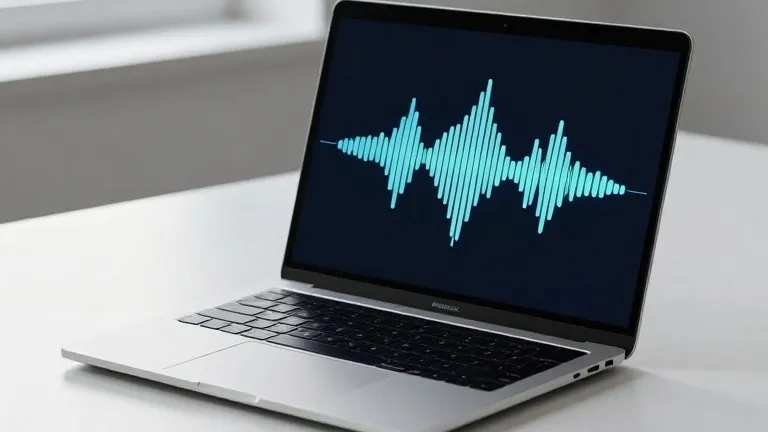
Block, the tech company led by Jack Dorsey, announced a new artificial intelligence model called Dessa on Wednesday. The system was trained from scratch using only human conversation, meaning it never processed written text during its development phase. The team described the software as a true speech-to-speech model, asserting that everything it knows derives directly from audio data.
To demonstrate the technology, Block published recordings of interactions between Dessa and various speakers. One sample shared by Ragavan Thurairatnam, who leads the project, showed a largely natural dialogue. However, the model initially mistook the speaker for a person named Ronaldo. The official website hosts additional examples, including a discussion about Christopher Nolan films that drifted into an unexpected tangent regarding Bryan Singer's Superman movies. In another clip, a user described a surprise trip to Paris, prompting a response that the site characterized as teary gratitude. A separate recording paired Dessa with OpenAI's GPT-Live-1 voice model, resulting in a more natural-sounding exchange.
The developers stated that the model can run locally on a MacBook Pro M4 Max or better hardware. They cited three main reasons for creating the system: curiosity, improved human-AI understanding, and safety. The team compared the learning process to that of babies, noting that infants learn to talk without ever seeing written words. They observed that while the concept is simple, the technical execution is very difficult.
The project team argued that current voice assistants underutilize the potential of spoken language. They claimed that speech is the most natural interface for intelligence, yet existing systems flatten user input into text and fail to match human timing. The safety aspect of the project focuses on emotional recognition. The team noted that modern AI systems are gaining independence while remaining nearly deaf to the emotions present in a user's voice. They presented a scenario where a person is in serious pain, but the voice assistant carries on regardless because it cannot detect the distress. Dessa is positioned as a step toward fixing this disconnect.
Block plans to provide early access to a small group of AI safety researchers. The company did not outline a specific timeline for a wider public release of the model.
Source: The Verge