Nvidia's Top Chips Found in Chinese State Network
Security researchers discovered 32 banned Nvidia B300 GPUs inside China Telecom, prompting Nvidia to call the leak a minor issue.
By Yasmin Duda ·
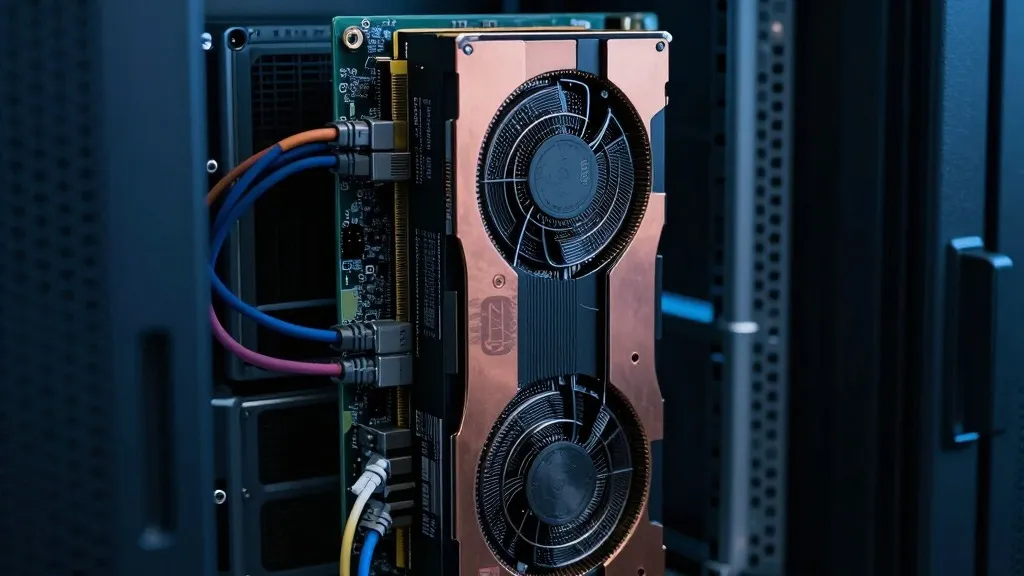
Nvidia has pushed back against reports that its newest and most powerful processors have been smuggled into China, calling the discovery a minor blip in a massive market. This response comes after Lava, an Israeli cybersecurity firm, announced that it identified 32 Blackwell Ultra B300 chips operating within the network of China Telecom. China Telecom is a state-owned telecommunications provider, making the presence of these specific chips particularly notable given current trade restrictions.
The B300 series is currently barred from export to China under U.S. regulations. These rules dictate that such high-performance hardware can only be sold to approved buyers who agree not to resell or transfer the technology to sanctioned entities. The fact that these units are now detected in a major Chinese state network raises questions about how the chips bypassed these controls. The Information reported that the chips are indeed present, confirming the findings by Lava.
This is not the first time Nvidia’s silicon has been found where it should not be. In 2025, reports indicated that Chinese companies smuggled approximately $1 billion worth of Nvidia AI chips into the country in just three months. At that time, the B200 model was the primary target, but distributors were already preparing for the release of the newer B300 series. The continued flow of these chips suggests that export controls remain difficult to enforce completely.
An Nvidia spokesperson addressed the findings directly, suggesting that while the diversion is real, it is statistically small. The company noted that recent court cases have shown that diverted U.S. products account for less than half of one percent of total volume. The spokesperson described this amount as a drop in the bucket compared to the vast amount of domestic computing power China already possesses. Nvidia also pointed out that tens of millions of its GPUs are already in service in approved countries, reinforcing their stance that smuggling is not a major factor.
Lava was able to locate the 32 chips using Nvidia’s own DCGM Exporter tool. This software is typically installed by data center operators to monitor server health and performance. Although intended for internal use, the tool can sometimes be accessed from outside the data center network. Notably, it does not always require password authentication, which may have allowed researchers to spot the hardware. Nvidia has confirmed it is working on a new tool to help locate its chips, but that solution has not yet been released.
The B300 is a significant piece of hardware, announced in March of last year as a leader in data center performance. It offers 50% more memory and FP4 compute capability than the previous-generation B200. Nvidia marketed the chip as being built for the age of reasoning, citing its suitability for advanced AI models. The chip was expected to ship by the end of 2025 and quickly became highly sought after.
The drive to acquire these chips has led to complex smuggling operations. In August 2026, nine people were indicted in Taiwan for illegally exporting B300 GPUs to China. This followed an investigation by Supermicro, which fired several employees connected to the smuggling. The scheme involved a Taiwanese server trading firm called Flying Tiget Tech, which had whitelisted status for GPU purchases, allowing it to buy the hardware before it was moved across the border.
The high demand for Nvidia hardware has also driven up prices for older equipment. A100 servers, which are five years old, have tripled in price and can cost up to $82,000. In some cases, companies are even retooling gaming GPUs to handle AI workloads. As Nvidia continues to monitor the situation, the discovery of these chips in China Telecom’s network serves as a reminder that the flow of advanced technology remains a complex issue.
What happens next is unclear, but Nvidia insists that the overall impact remains limited. The company continues to sell its chips to approved partners, while security firms like Lava keep an eye out for unauthorized transfers. For now, the 32 B300 chips remain in China Telecom’s server racks, a tangible example of the challenges in controlling the global flow of AI hardware.
Source: Tom's Hardware · original report published