Balboa Park Parking: Zoo Fees Remain, City Lots Go Free
San Diego Zoo will maintain its $16 fee for non-residents while ending charges for city residents on January 1, preserving a revenue stream that generates $3 million annually for park improvements.
By Enzo Conti ·
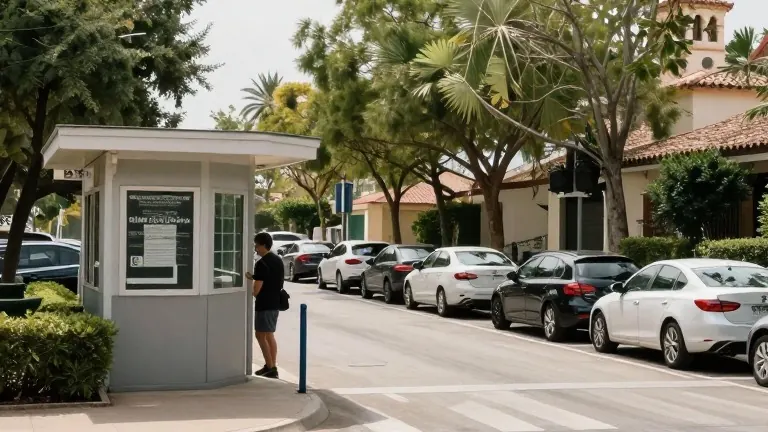
The San Diego Zoo will keep charging for parking after Balboa Park reverts to free parking on January 1, preserving a revenue source that supplies $3 million each year to the city for park maintenance and upgrades.
The zoo announced its decision on October 30, ending months of deliberation that began when the city announced in May it would end paid parking throughout Balboa Park on January 1. The park-wide program was launched in 2026 as part of a city effort to balance its budget.
City residents will not pay for parking at the zoo starting January 1. Under the zoo's lease agreement with the city, free parking for city residents is contingent on parking being free elsewhere in the park for those residents. The zoo currently charges $8 for city residents and $16 for non-residents. Active-duty military personnel, zoo members, employees, and volunteers park for free.
Zoo officials estimated total paid parking revenue for 2026 at approximately $7.3 million. After deducting $700,000 in parking expenses, net revenue is projected at $6.6 million, split evenly between the city and the zoo. Officials declined to say whether they had considered offering free parking to all San Diego County residents, stating that the zoo's policy follows its lease agreement with the city.
The San Diego Zoo has 3,100 parking spaces. The zoo began charging for parking in 2025 after the city announced plans to implement fees across Balboa Park in 2026. Without zoo fees, those spaces would have been occupied by visitors seeking free parking elsewhere in the park.
Museum officials have raised concerns that zoo visitors may shift to free lots near Central Mesa, reducing availability for museum patrons, Spanish Village visitors, and others. Judy Gradwohl, chief executive of the San Diego Natural History Museum, said in July that if the zoo continues charging for parking after the city ends the practice, "it's likely that zoo visitors will shift into the park's free lots, reducing availability for people visiting the museums, Spanish Village, clubs or simply planning to enjoy the park itself."
Peter Comiskey, executive director of the Balboa Park Cultural Partnership, said the organization accepts the zoo's decision. "Parking practices at the zoo are the zoo's call because their lots are within its leasehold," Comiskey said. The partnership is a consortium of museums and nonprofits.
Zoo officials said they do not expect a surge of visitors parking in nearby lots because city residents will park for free at the zoo, and military personnel and members already do so. They said they are willing to address issues if they arise. "If zoo visitors begin parking in neighboring lots, we're committed to working with our Balboa Park neighbors and the city to solve it," the zoo said.
Patty Riddle, chair of the Balboa Park/Morley Field Recreation Council, said she was satisfied with the outcome. "They can do whatever they want as far as I'm concerned," Riddle said. "I would prefer it if they didn't, but this is better than other options."
Zoo officials said paid parking has improved the visitor experience by ensuring space availability. They compared their $16 car fee to $37 at SeaWorld and $40 at Legoland for oversized vehicles. The zoo charges $44 for oversized vehicles. The zoo will announce its residency verification process before January 1.
Source: The San Diego Union-Tribune