Lebanon ceasefire: Survivors recount deadly drone and missile strikes in southern village
A 21-year-old photojournalist survived hours under rubble after a strike on al-Tiri killed her veteran colleague and two local men.
By Ahmed Peterson ·
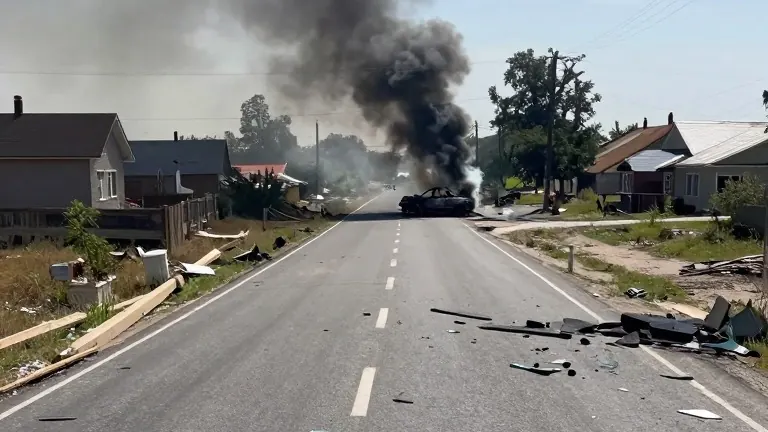
Zeinab Faraj, a 21-year-old photojournalist, survived a series of missile and drone strikes in southern Lebanon on 22 April 2026 that killed her colleague, Amal Khalil, and two other men. Faraj was trapped under rubble for an extended period before paramedics extracted her from the site in the village of al-Tiri.
The attack occurred shortly after an Israeli ceasefire with Lebanon, which had followed a month of intense airstrikes focused on the south. Faraj, who was completing a degree in radio and television, joined Khalil, a 42-year-old newspaper reporter, to document the aftermath. The group also included Ali Nabil Bazzi, 27, a municipal official, and Mohammed Hourani, 37, a friend of the mayor. The men had met the journalists at Tebnine governmental hospital earlier that day.
A missile struck the car carrying Bazzi and Hourani as the journalists approached al-Tiri. Faraj described hearing Khalil scream before seeing the vehicle on fire. Drones then flew low over the two women as they attempted to call for help. Emergency services assured them aid was coming, but paramedics instructed them to drive back up the road because ambulances were blocked. A second missile hit their car as they tried to enter it, throwing both women backward.
Khalil sustained visible injuries to her face, hand, and leg. The pair took shelter in a nearby house while drones circled overhead. Faraj sent a final message to her sister stating, 'There’s no hope left. Forgive me.' She later found herself trapped under a heavy weight of debris, struggling to breathe until a paramedic reached the scene. He held her by the shoulders while a second worker cleared the rubble. Faraj was pulled free as a stun grenade was dropped by a drone.
Khalil is believed to have died approximately one hour before paramedics were permitted to return to the area. The Israeli military stated the strike targeted saboteurs violating the ceasefire, a characterization human rights groups labeled a war crime. An Israeli military spokesperson had shared a video of Khalil a week prior, describing her coverage as 'terrorist media.' Khalil had also received death threats from Israeli numbers.
Faraj is now preparing to return to university, though she walks with a limp and has visible injuries to her hand and face. She reports waking at night screaming and feeling detached from her surroundings. The image of Hourani lying on the ground with his eyes open remains a persistent memory for the survivor.
Source: The Guardian