17 Injured as Starlink Speed Limits Disrupt Ukraine Defense
A recent restriction on high-speed satellite access in Ukraine highlighted the growing geopolitical risks of relying on a single private space company for national security.
By Ahmed Peterson ·
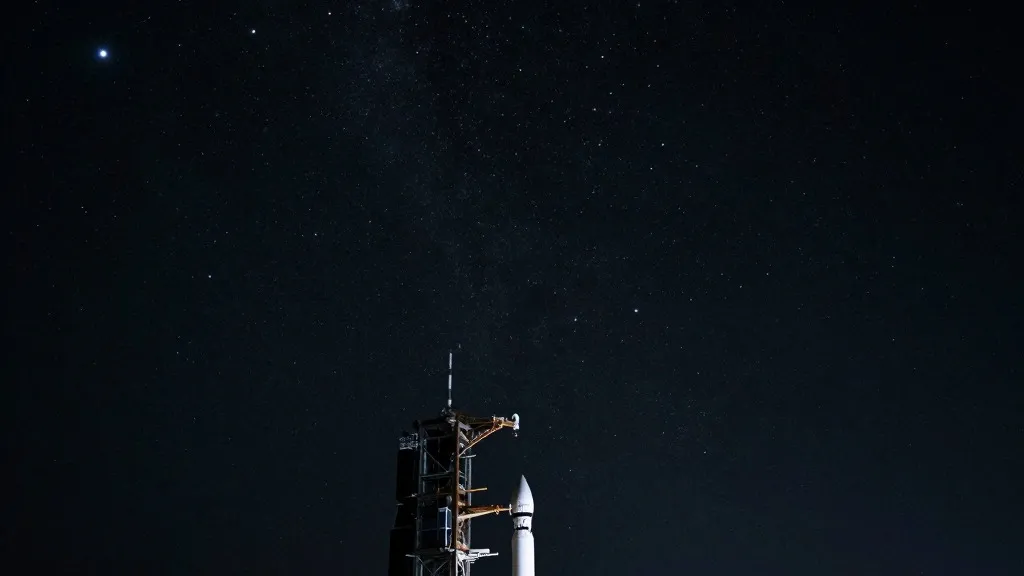
The sudden loss of satellite connectivity in the sky above Ukraine has forced a hard look at who really controls access to orbit.
Last week, military terminals used by Ukrainian forces were throttled by Starshield, the defense-oriented version of SpaceX's Starlink constellation. The limitation prevented devices moving above specific velocity thresholds from maintaining a connection. This disruption affected interceptors tasked with stopping Russian drones that carry bombs. As a result, Russia found it easier to target the nation's energy grid. The conflict reportedly caused two deaths and left at least seventeen people injured during the period of reduced coverage.
Ukrainian military officials stated they received no warning before the service changes took effect. President Volodymyr Zelenskyy characterized the move as a direct signal from the United States. This occurred as tensions escalated between his administration and President Donald Trump. Public criticism followed quickly, with many blaming the US president for stepping back from support. Others directed their frustration at SpaceX CEO Elon Musk, viewing the company as an enabler of the shift.
Accounts of how the decision was made have changed in recent days. Musk initially claimed that SpaceX did not control Starshield and that the US military made the call. The White House later denied taking direct action. Subsequent reports indicated that Musk proposed the slowdown to Trump, who then approved it. Another version suggests Musk ordered the restrictions independently. Access for Ukrainian users has since been restored, but the uncertainty remains.
This incident underscores a broader dependency on American technology for Ukrainian defense. Access to these systems has been limited before, such as in 2022 when coverage was not extended to aid a counteroffensive in Crimea. Experts argue that the episode reveals how much leverage has concentrated in the hands of one unelected executive. This outcome stems from the heavy concentration of the space industry within a single corporation.
Wendy Whitman Cobb, who teaches at the School of Advanced Air and Space Studies at Maxwell Air Force Base, notes that SpaceX effectively holds a monopoly on launch capabilities. While rivals like United Launch Alliance, Blue Origin, and Rocket Lab exist, none match SpaceX in frequency, scale, mass capacity, or cost efficiency. Oğuz Karasu, a space economist at the Oxford Space Initiative, describes this dominance as practical rather than legal. Launch represents roughly eight percent of the space industry, but the rest of the sector cannot function without it.
SpaceX has deployed a network of over 10,000 Starlink satellites into low Earth orbit using Falcon 9 rockets, which launch at low cost. Andrew Reddie of the University of California, Berkeley, compares the situation to an antitrust issue. Since SpaceX launches often support its own constellations, there is little incentive to carry competing payloads. Although the company has launched some satellites for Amazon's Kuiper project, which is now known as Leo, pricing dynamics are shifting. Both Whitman Cobb and Karasu report hearing complaints that Falcon 9 prices for low Earth orbit are rising. Starlink service prices have also climbed since its beta phase began in 2020.
The stakes of this concentration extend to daily life through global positioning systems and satellite communications. Whitman Cobb points out that a GPS outage could disrupt fuel pumps, automatic teller machines, financial transactions, and ambulance dispatch systems. Karasu argues that placing so much control in one person’s hands is not ideal for society’s long-term future.
Major government agencies also face exposure to these market shifts. SpaceX is reportedly planning to retire the Falcon 9 rocket and stop accepting new missions starting in 2028. This timeline leaves the Space Force searching for alternative launch options for military satellites. It also raises questions about NASA’s future access to the Crew Dragon capsule. A technical issue with Falcon 9 in February briefly grounded the vehicle and created concerns for the Crew-12 mission. NASA continues to support Boeing’s troubled Starliner program and contracts with firms like Rocket Lab and Blue Origin. Michele Scataglini of the Oxford Space Initiative says the market needs more competition to be a true market.
Reddie identifies the core security problem as a non-state actor making decisions that look like government actions. He notes that this episode directly impacted Ukraine’s defensive capabilities. Scataglini calls it a global wake-up call, warning that one firm could determine which countries, especially in the Global South, get access to space. Whitman Cobb remains cautiously optimistic that these events will increase awareness of the risks associated with relying on a single company, even though it took casualties for the issue to gain traction.
Source: The Verge