New AI Data Center Mandate Aims to Cut Local Energy Bills
The White House is pressuring hyperscalers to share excess power with nearby residents to offset rising utility costs and ease community opposition.
By Enzo Conti ·
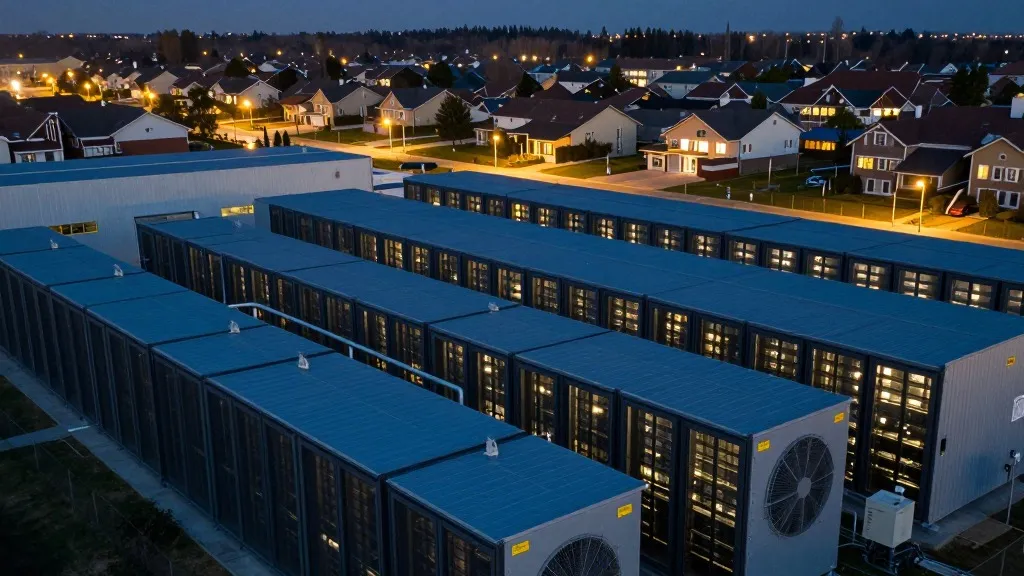
Tensions between rapidly expanding artificial intelligence infrastructure and the small towns hosting them have reached a breaking point. In a direct response to growing local unrest, President Donald Trump issued a new directive demanding that data center operators provide an energy dividend to surrounding communities. The move is designed to transform these facilities from sources of frustration into partners in local economic stability by ensuring that residents benefit from the massive power generation capabilities required by AI workloads.
The conflict stems from a series of grievances raised by communities across the United States. Residents have increasingly protested against the outsized footprint of AI data centers, citing a cascade of negative impacts including skyrocketing electricity rates, persistent noise pollution, and significant strain on local water resources. Additional concerns include air quality degradation and deforestation, factors that have made large-scale computing hubs increasingly difficult to sell to the public in many regions.
The administration’s timeline for addressing these issues has accelerated in recent months. Previously, the White House ordered these companies to generate their own electricity to reduce reliance on the existing grid. This latest mandate builds on that requirement by explicitly stating that any excess energy produced must be given to or sold back to the local community. This follows a recently passed act that obligates data centers to cover the costs of necessary grid upgrades, preventing those expenses from being passed on to local taxpayers.
In his post on Truth Social, Trump framed the strategy as a practical solution to the current political impasse. He noted that data centers, which were previously unpopular in certain areas, have become extremely popular once financial agreements were reached. The President urged industry leaders to "MAKE DEALS" to expedite construction, signaling that the administration’s priority remains winning the AI race against China while simultaneously recapturing public favor through tangible local benefits.
The proposed dividend is expected to take the form of direct relief for rising electricity costs. By selling or gifting surplus power, operators could alleviate one of the most immediate pain points for homes located near these facilities. This approach aligns with the administration’s broader goal of making data centers more palatable to local governments and residents, thereby smoothing the path for new construction projects that are critical to maintaining a competitive edge in the global technology sector.
However, the practical implementation of this mandate remains under scrutiny. While the financial aspect addresses utility bills, it does not resolve other significant environmental challenges. Issues such as enormous water consumption, ecological damage, and pollution remain major hurdles that continue to make AI data centers a difficult sell in many locations. The question of whether an energy dividend is sufficient to win over skeptical communities is yet to be answered, as the economic benefit is only one facet of a broader set of local concerns.
The next steps involve determining how these energy deals will be structured and enforced. As the administration pushes for more facilities to be built, the focus will shift to whether these voluntary or semi-mandated payments will materialize into substantial savings for local households. For now, the White House is betting that a direct financial incentive will be enough to turn the tide on public opinion and accelerate the buildout of the AI infrastructure it deems essential for national competitiveness.
Source: Tom's Hardware · original report published
More Business · Bad Service · Report a business · Got a Story?