Teenager Discovers 3,300-Year-Old Scarab
A high school student found an ancient Egyptian amulet during a study tour, leading to a formal handover to the Israel Antiquities Authority.
By Yasmin Duda ·
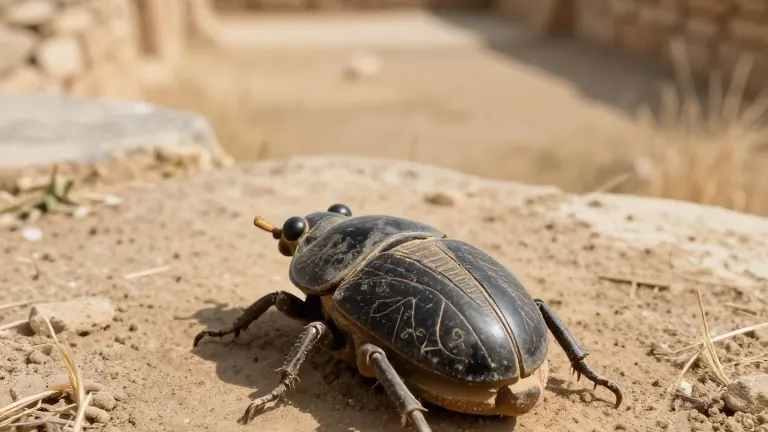
A 17-year-old American student stumbled upon a 3,300-year-old scarab amulet while walking through Tel Gezer National Park. The find occurred during a study tour organized by the Alexander Muss High School in Israel, a program run by the Jewish National Fund-USA. The group had arrived in the country only two days before their visit to the archaeological site.
Shiloh Attoun spotted the object on the ground while the class was discussing the history of the location. He picked it up and showed it to his guide, noting that it looked ancient. The group had recently debated the low probability of finding such an artifact, making the discovery surprising. The amulet is shaped like a dung beetle and features cobra designs, reflecting the cultural influence of ancient Egypt in the region.
The Israel Antiquities Authority announced the discovery on Tuesday. The scarab is not the only one found in the area. A similar amulet was unearthed at the Tell Qana archaeological site in Hod Hasharon in August. Ancient Egyptians considered the beetle sacred. They viewed it as a symbol of new life because the insect laid its eggs inside rolled balls of dung, which represented death.
Tel Gezer was a major Canaanite city in the second millennium BCE. It sat at a strategic crossroads in the Judean Lowlands. The site is currently managed by the Israel Nature and Parks Authority. When the students realized the object might be an important archaeological find, they reported it to the authorities.
Benji Hain, the dean of students at Muss, said the discovery created excitement among the group. The school contacted the Israel Antiquities Authority immediately to ensure they followed the correct procedure. The authority then sent Adam William Asper, an archaeologist and supervisor in its Central Region, to meet the group. Asper collected the artifact for the National Treasures of Israel Department.
Attoun received a certificate of appreciation from Asper for reporting the find. Professor Ido Koch of Tel Aviv University examined the amulet. He dated the seal to the Late Bronze Age. Koch described the design as showing two cobras above a semi-ellipse. The cobra, known as the Uraeus, served as a protective and royal symbol in ancient Egypt and the southern Levant.
The semi-ellipse beneath the cobras represents the Egyptian hieroglyphic sign for lord. Koch noted that a similar scarab with three snakes was found during excavations at Tel Megiddo in northern Israel. The identification of the symbols provides insight into the trade and cultural exchanges of the era.
Amit Melman, the educational director for the Israel Antiquities Authority's Central Region, praised the student and his instructors for handing the find over to the state. She described the event as a connection between young visitors and the country's history. Tali Tzour Avner, the chief Israel emissary for the Jewish National Fund-USA, said Attoun came to Israel to deepen his connection with the country.
Avner noted that Attoun encountered a piece of history during his first trip. Heritage Minister Amichai Eliyahu also commended the teenager. He thanked Attoun for acting responsibly by turning the ancient amulet over to the state. The minister said the discovery underscores the value of connecting young people from the Diaspora with the heritage of the Land of Israel.
Source: The Jerusalem Post