Roadster Software Reveals 5,500 PSI Thruster Readout and $50,000 Entry Price
Tesla’s new interface video links the vehicle’s digital telemetry to its high-pressure hardware, confirming the operational status of the thruster system ahead of the 2028 launch.
By Enzo Conti ·
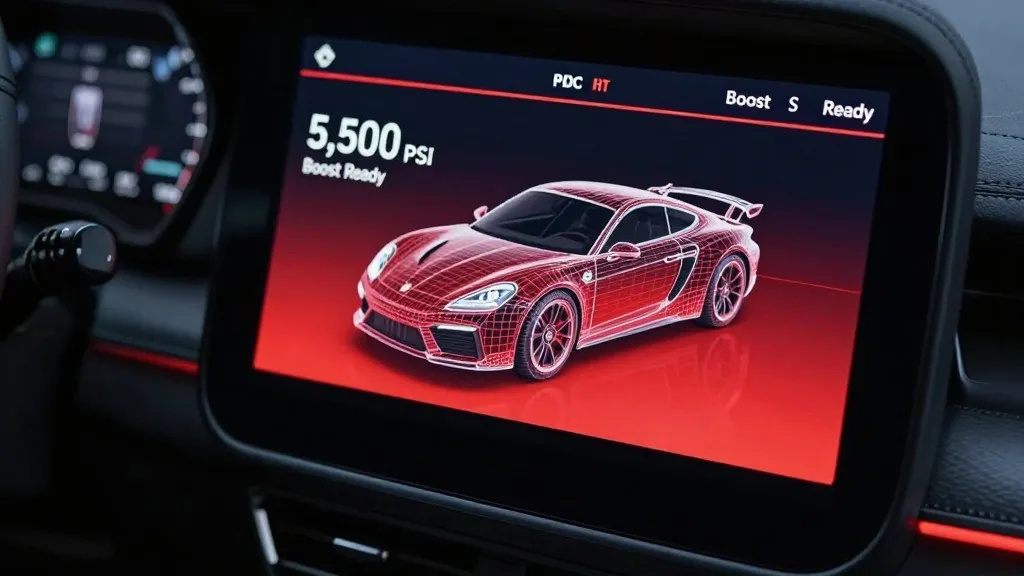
A new 34-second video released by Tesla on Friday afternoon provides the most definitive look yet at the cockpit interface for the next-generation Roadster, highlighting a critical hardware dependency: a live gauge reading of 5,500 PSI for the vehicle’s cold gas thruster system. This digital readout, labeled 'Thruster' and accompanied by a 'Boost Ready' indicator, serves as the primary software link to the physical hardware Tesla unveiled near Waco, Texas, on October 15. For potential buyers, this confirmation is significant as it ties the vehicle’s user experience directly to its most extreme performance feature.
The interface, described by Tesla in the video caption as 'Inspired by fighter jet cockpits,' places the pilot at the center of the design philosophy. The visual presentation departs from the company’s standard aesthetic, opening with red graphics and a 3D wireframe of the vehicle situated beside its squared-off yoke. The home screen prioritizes the car itself over the traditional map-centric layout found in other Tesla models, with a row of tabs for Home, Vehicle, Listen, Climate, and Navigate along the bottom. Controls for the rear wing, including low drag and high downforce positions, are accessible via the 3D model, alongside a charging page featuring a charge limit bar and a compact music player.
The majority of the demonstration focuses on Track Mode, a suite of tools designed for circuit driving. The dashboard displays a live circuit map, session lap times, and detailed telemetry for brake and motor temperatures, as well as individual tire pressure and temperature. A dedicated setup page allows drivers to select from Auto, Low Drag, High Downforce, or Custom aero modes, while also permitting adjustments to aero balance and brake balance. Crucially, the interface allows users to switch off stability and traction control, catering to high-performance driving scenarios.
This software functionality aligns with the three distinct configurations of the Roadster detailed in recent reports. The Thrust and Rocket versions utilize cold gas thrusters fed by carbon-overwrapped pressure vessels, with Tesla listing 0 to 60 mph acceleration times of under 0.9 seconds and under 0.59 seconds, respectively. In contrast, the base Performance model relies on a fan and ground sealing system for grip. The aero settings visible in the video correspond to the active wings and suction setup previously analyzed for downforce generation.
The Roadster’s cockpit layout represents a notable shift from the rest of Tesla’s current lineup, which typically centers on a map display. The company’s official page indicates that the Roadster will feature two smaller forward displays in addition to the main touchscreen. However, Tesla has not confirmed whether the advanced Track Mode telemetry will be rolled out to other models, such as the Model 3 Performance, leaving that question open for future software updates.
Market access for the vehicle is structured around a tiered reservation system. Reservations are currently open with an initial payment of $50,000. The Thrust version is designated as a limited release, while the flagship Rocket version, which is not yet approved for public road use, is available on an invite-only basis. Elon Musk has stated that production for the Roadster is scheduled to begin in 2028, setting a clear timeline for when these software features and hardware specifications will reach customers.
The interface shown in the video is not final, and Tesla notes that the design could still change before deliveries commence. Nevertheless, the release of this walkthrough provides a concrete benchmark for the vehicle’s digital experience, moving the concept from speculative renders to a functional demonstration of how drivers will interact with the thruster system and aero controls.
Public interest in the vehicle is set to increase this weekend, as the Roadster will be displayed in the lobby of the Petersen Automotive Museum in Los Angeles from October 24 to October 27. According to Sawyer Merritt, this exhibition marks the first opportunity for the general public to view the car up close. The timing of the show, coinciding with the release of the cockpit video, suggests a coordinated effort to maintain momentum ahead of the 2028 production start.
From a business perspective, the emphasis on the 5,500 PSI thruster readout and the fighter-jet-inspired interface reinforces Tesla’s positioning of the Roadster as a premium, performance-focused flagship rather than a standard family sedan. By linking the software directly to the high-pressure hardware, the company is validating the engineering claims made in October, providing a level of transparency that may influence buyer confidence and reservation conversions in the coming months.
Source: Teslarati · original report published
More Business · Bad Service · Report a business · Got a Story?