Aer Lingus flight rerouted to Normandy after bomb threat
The diversion to an Evreux military airbase follows a wave of similar alerts across Europe this week.
By Enzo Conti ·
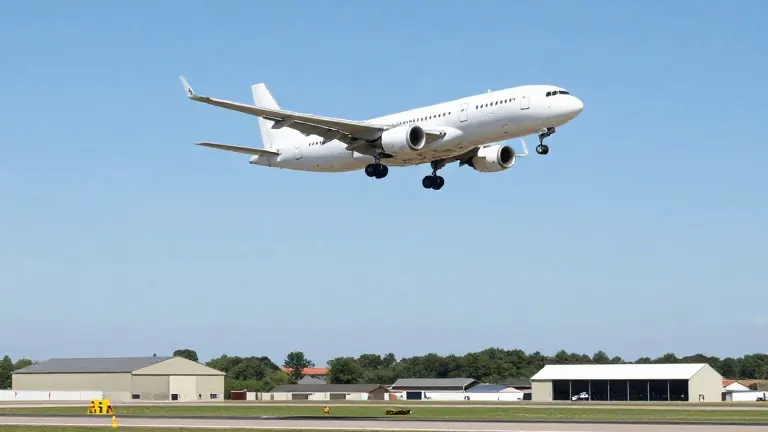
An Aer Lingus Airbus A320 diverted to a military airbase in France on Thursday following a bomb threat.
The aircraft was flying from Dublin to Rome when it declared an emergency. Flight-tracking data from Flightradar24 showed the plane changing course near Paris before circling over Evreux in Normandy. The French prime minister's office confirmed that Prime Minister Sébastien Lecornu's team was monitoring the situation. The government did not release further details immediately.
This diversion occurred while authorities handled multiple threats against passenger flights in the region. On Tuesday, roughly 10 European flights received bomb threats. These disruptions led to the temporary closure of an airport in Warsaw and the deployment of air force jets in Rome. A separate count of Tuesday's incidents listed threats against seven flights and one cruise ship. Investigators found no explosive devices in any of those cases.
The threats have continued into Thursday. Belgian media reported that a Polish LOT aircraft was forced to land at Brussels' Zaventem airport. In Italy, air force planes escorted a Finnair flight from Helsinki to its scheduled landing in Rome. A source familiar with the matter said that flight landed safely. Bulgarian authorities reported three emergency landings prompted by bomb threats. Two aircraft from Copenhagen and Madrid landed in Sofia, according to the interior minister. A third plane from London landed in Plovdiv.
The airlines affected by Tuesday's hoax alerts included LOT, Scandinavian Airlines, Wizz Air, and Ryanair. These events followed a similar threat on Monday against a plane bound for Bulgaria. That aircraft was diverted to Hungary while in flight, and no one was injured.
No country has claimed responsibility for the threats. European officials have accused Russia and Iran of conducting sabotage and hybrid attacks. Both Moscow and Tehran deny running such a campaign. In a related incident this week, hackers shut down supermarket refrigerators in several European countries. Some experts suggest that hoax bomb threats fit a pattern of inexpensive disruption that allows responsible parties to deny involvement.
Source: France 24