Trump's $5,000 Dividend Stalls as Democrats Seize Congress
The President's promise of a payout for every adult citizen now faces a new Democratic majority and a party that lost the chamber required to fund it.
By Yasmin Duda ·
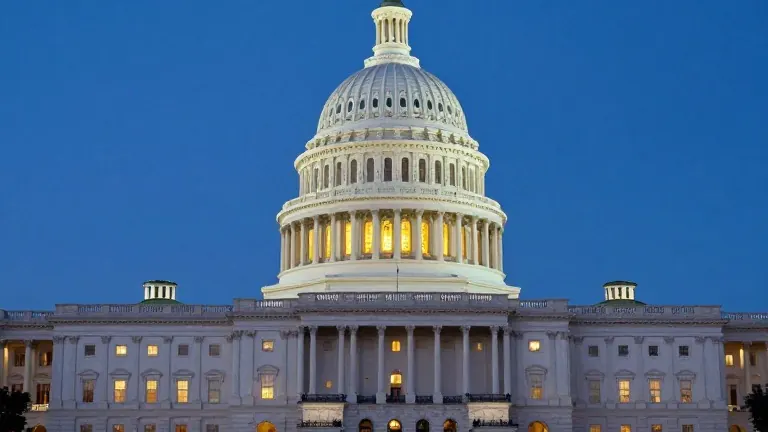
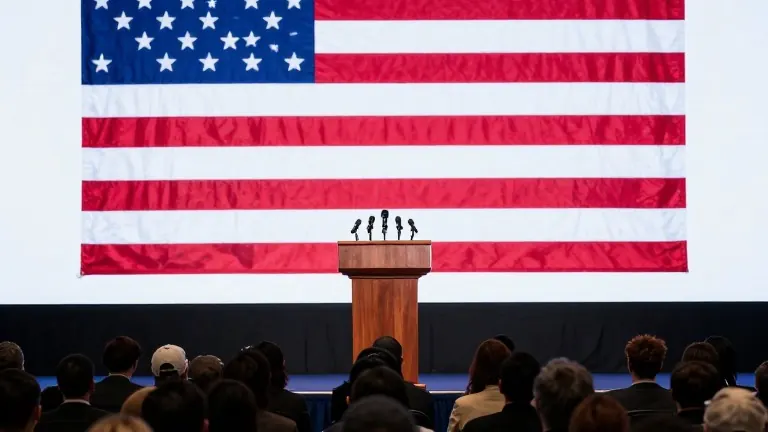
The promise of a $5,000 check for every American adult has officially entered the realm of political uncertainty following Tuesday's election results. President Donald Trump pledged the payment, dubbed the Trump Dividend, during the Republican Midterm Convention in Dallas if his party retained control of both the House and Senate. The strategy relied on a specific outcome that no longer holds, as Democrats have swept both chambers of Congress, ousting Republicans from power and leaving the funding mechanism in question.
According to the Associated Press, Trump made the unusual pitch to the crowd in Dallas, stating, If the Republicans win, you win with us and you get $5,000. The President argued that the nation's economic success made the payout possible, comparing the dividend to corporate cash distributions. However, the legal and financial architecture required to deliver on this promise has been disrupted by the change in leadership in Washington. The new Democratic majority now controls the legislative agenda, and with it, the power to approve or deny the massive expenditure.
House Speaker Mike Johnson, who led the Republican effort for three years, acknowledged the complexity of the plan even before the results were finalized. In a statement reported by the Associated Press, Johnson said congressional approval is needed for the payment to proceed. He described the idea as creative and pledged to work through the process, but the political landscape has shifted dramatically. With Democrats now holding the majority in the House, the path to passing a bill that would authorize a $1.2 trillion expenditure is significantly steeper.
The cost of the Trump Dividend is a central point of debate among fiscal experts and politicians alike. The U.S. Census Bureau estimates there are approximately 245 million U.S. citizen adults, which would make the total cost of the checks around $1.2 trillion. This figure adds to a national debt that is already nearly $1.8 trillion in annual deficit, according to the Associated Press. Critics argue that such a large injection of cash could exacerbate inflation, a concern that voters cited as a primary reason for their dissatisfaction with the administration's economic management.
PolitiFact analyzed the feasibility of the payments and found that the biggest payout is far from certain. The fact-checkers noted that the White House has not announced a formal plan for how Americans would receive the checks. While Trump cited tariff revenues as a potential source of funding, the Tax Foundation estimated that the new tariffs would generate significantly less revenue than the cost of the dividend. Erica York, a senior economist at the Tax Foundation, stated that the cost of the checks would spend almost all the revenue that the new tariffs are projected to bring in over a decade.
Democratic leaders have quickly moved to make the promise a focal point of their oversight agenda. Rep. Hakeem Jeffries of New York, who is in line to become the new House Speaker, has not ruled out investigating the administration's financial dealings. The Associated Press reports that Democrats are vowing to probe what they describe as the self-enrichment of the President and his orbit. This includes looking at how the administration has handled federal funds and whether the economic conditions supporting the dividend promise have been accurately represented to the public.
The election results also highlight a broader voter sentiment that may have influenced the decision to reject the dividend. Exit polls indicated that record Election Day diesel and gasoline prices pushed millions of Americans toward Democrats. The Associated Press reported that three-quarters of voters said the economy is not so good or poor, with about 8 in 10 reporting that inflation has caused a severe or moderate financial hardship. This skepticism toward large government spending promises aligns with the bipartisan criticism that emerged in Dallas, where even some Republicans questioned the price tag.
Vice President JD Vance, who is scheduled to be sworn in as a Senator after losing his re-election bid in Ohio, had previously suggested that the money would come from tariff revenue and benefit the American middle class. However, the legal hurdles remain. Rick Hasen, an election law professor at UCLA, noted that while the promise is likely protected by the First Amendment as a campaign pledge, it does not create an automatic obligation for the executive branch to spend the money without legislative authorization. The shift in power now means the Democratic leadership has the final say on whether the Trump Dividend becomes law.
The President's past track record with similar payments adds to the skepticism surrounding the new promise. Trump previously promised $2,000 tariff dividend checks in November 2025, but those payments never materialized. He also backed the idea of a DOGE dividend of $5,000 in early 2025, which also failed to come to fruition. The Associated Press noted that the administration's previous financial pledges have often been followed by delays or cancellations, leading many voters to view the new $5,000 offer with caution. The new Democratic Congress is expected to scrutinize these past failures as part of their broader oversight of the administration's finances.
As the new Congress prepares to convene in January, the Trump Dividend will likely be one of the first items on the table. The Democrats, who now hold the House and Senate, have vowed to use their investigative powers to examine the administration's economic policies. The promise of a $5,000 check, once a centerpiece of the Republican campaign, now serves as a test of how effectively the new majority can manage the budget and address the cost of living concerns that drove voters to the polls. The final outcome will depend on whether the two parties can find a path forward or if the dividend remains a campaign promise unfulfilled.