California Balcony Solar Law Leaves Renters Waiting on Landlords and Certifiers
The new Plug and Play Solar Act allows small panels to plug into outlets, but legal ambiguity and technical certification hurdles complicate adoption for tenants in the state.
By Ahmed Peterson ·
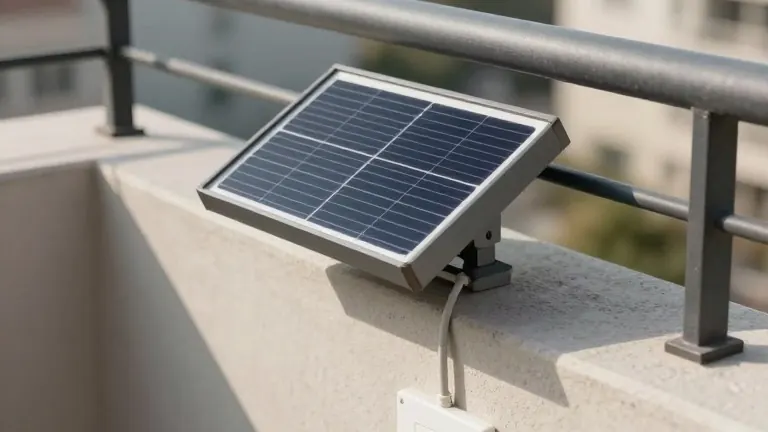
California residents can now plug small solar panels directly into wall outlets without utility approval starting in January, a change that shifts the primary barrier for renters from utility bureaucracy to lease agreements and property owners. The Plug and Play Solar Act, signed by Gov. Gavin Newsom last month, permits the use of certified panels under 1,200 watts, removing the need for complex utility permissions that previously slowed installation.
The economic case for these systems is modest for individual apartments. Michael Scherer, co-founder of Texas-based manufacturer Craftstrom, noted that 95% of U.S. customers for these lightweight systems are homeowners rather than renters. He explained that a typical 400-watt panel could power a refrigerator or other small appliances like laptops and lamps, but it would not meaningfully offset the cost of air conditioning, which he said requires a system of at least 3,000 to 4,000 watts.
Bright Saver, a nonprofit energy company, provides specific savings data for its two-panel kit costing $414 plus a $29 membership. The organization’s calculator estimates that a 360-watt system in East Hollywood would save a user between $113 and $142 in the first year. Over a decade, assuming a 7% annual rate increase, that initial investment would lead to $1,764 in total savings.
Legal experts warn that the current framework does not explicitly protect tenants. Joseph Kaatz, a senior staff attorney at the Energy Policy Initiatives Center at the University of San Diego School of Law, described the situation as an open question. While California’s Solar Rights Act prevents homeowner associations from blocking solar panels, it was originally designed for homeowners and property transfers, not rental agreements. Kaatz believes the law’s language could apply to rentals, but no court has tested this interpretation yet.
Other states have moved to close this gap. New Jersey, Colorado, Virginia, and Vermont have enacted balcony solar laws that include clauses barring landlords from prohibiting the systems, provided tenants give notice and follow reasonable restrictions. A bill recently introduced in Congress would require states to adopt similar protections, but California’s legislation omits these specific tenant rights.
Industry leaders are divided on the law’s practical impact. Daniel Yukelson, executive director of the Apartment Assn. of Greater Los Angeles, said his group reads the bill as allowing tenants to install panels, but he plans to seek an amendment next year. Yukelson cited concerns about trip hazards from wires running along buildings and fire risks from panels placed on balconies. Tanya Mannes Castaneda, spokesperson for the Southern California Rental Housing Assn., said her organization is currently analyzing how the law affects its members.
A separate technical hurdle remains certification. Cora Stryker, co-founder of Bright Saver, stated that the main U.S. certification body, UL Solutions, currently requires an electrician to rewire power outlets to accept a special plug for plug-in solar systems. Stryker said this requirement is difficult for renters who do not typically hire electricians. Bright Saver is petitioning UL Solutions to exempt kits under 360 watts from this requirement, arguing they produce too little power to endanger home wiring.
UL Solutions has not agreed to the exemption. Colleen O’Brien, a principal engineer at the firm, said in a statement that lower wattage alone does not eliminate the risk of overheating electrical components or creating fire hazards. For a panel to be sold under the new California law, it must meet these certification standards. As of now, no panel kits have received approval, though advocates expect at least one to be cleared by the end of the year.
Source: Los Angeles Times
More Business · Bad Service · Report a business · Got a Story?