Court papers detail difficult needle placement during death row inmate's failed execution
Legal filings reveal that medical staff struggled to access veins before injecting a Tennessee prisoner with lethal drugs.
By Yasmin Duda ·
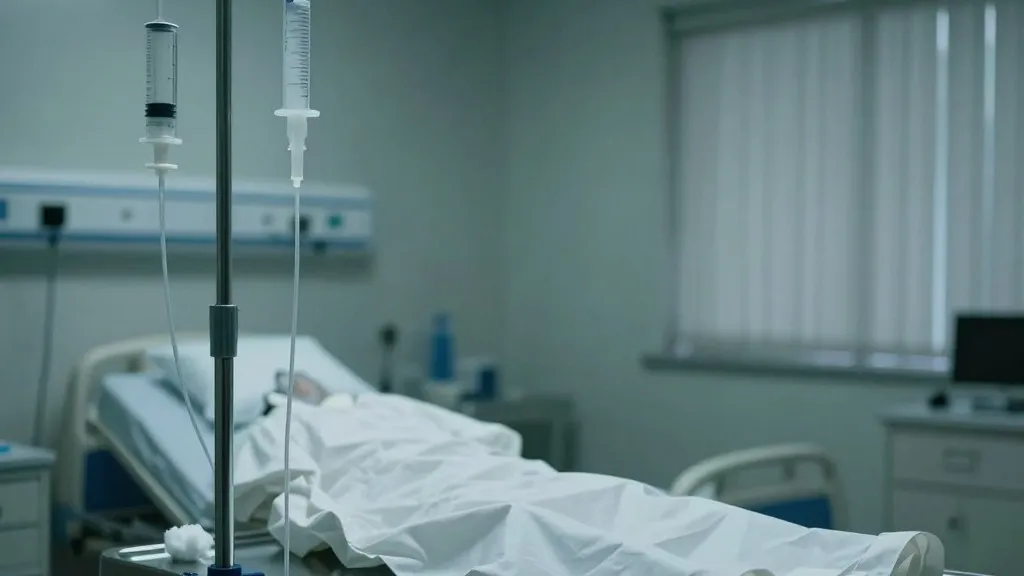
New court documents filed on Thursday provide the clearest picture yet of the medical difficulties encountered during a recent failed execution in Tennessee. The filing details how members of the execution team struggled to find working veins in the arm of inmate Christa Pike before administering the first dose of lethal drugs. According to her legal representative, staff members expressed concern that some vessels had already ruptured or become damaged before the final injection took place.
Pike, who is 50 years old, was hospitalized after surviving two doses of pentobarbital during a state attempt to put her to death on September 30. She was originally sentenced to death for the 1995 stabbing death of a classmate. At the time of the crime, she was 18 and had killed the victim with her boyfriend. This event made her one of the youngest women in history to receive a capital sentence.
The state’s standard protocol requires a second injection if the first does not result in death. However, the rules do not specify what happens if a person survives both doses. Following the attempt, Pike required a ventilator for several days. Her legal team feared she might not survive, but she eventually regained consciousness and has since been returned to prison after being discharged from the hospital.
The new filing was submitted in a separate legal case where other death row inmates are challenging the state’s injection procedures. Kit Thomas, an attorney for those challengers, noted that the recent events confirmed his warnings about the high risk of procedural errors. He stated that these predictions would continue to be realized unless the system underwent significant changes.
According to the filing, the medical team began trying to place the two required intravenous lines at 6:34 p.m. They used approximately ten needles and tried multiple sites on both of Pike’s arms. The right arm took about six minutes to complete, but the left arm required nearly an hour. Pike, who was conscious, suggested that the team look in her upper arm for a usable vein to help speed up the process.
During the procedure on the left arm, Pike winced and grimaced as staff moved the needles. At 6:57 p.m., one team member suggested a vein might be blowing, though others were unsure. A later needle appeared severely bent when removed, and at 7:07 p.m., another member said he thought it had blown. The team declared success at 7:13 p.m. Phone calls to the execution chamber started five minutes later. By 7:34 p.m., Pike said her arm felt like it was about to burst and that it burned. She began making an agitated snoring sound about ten minutes after speaking with a spiritual adviser.
Over the next half hour, Pike strained and appeared to struggle to breathe. Her attorney asked to use a phone but was led on a seven minute walk through the facility instead of being allowed to use the phone in the witness room. He called colleagues at 8:22 p.m. to request a stop to the execution, noting that a third dose was not authorized and that Pike needed immediate medical care. An ambulance arrived at the hospital at 9:14 p.m., about twenty minutes after staff began life-saving measures.
Source: CBC News