Shovels hit dirt at Kalihi site for massive housing rebuild
The first phase of the $333 million Mayor Wright Homes project is set to replace aging stock with over 2,400 units by 2029.
By Ahmed Peterson ·
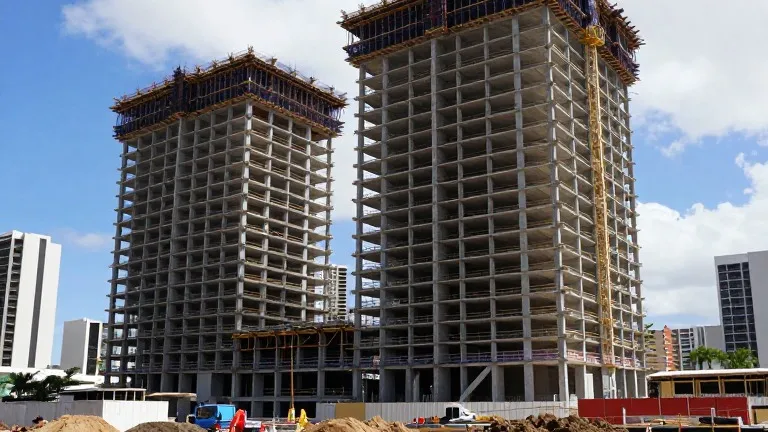
Construction officially began on Thursday for the first phase of the Mayor Wright Homes redevelopment in Honolulu's Kalihi-Palama neighborhood. The 15-acre site, bounded by King Street, Liliha Street, and Vineyard Boulevard, will host the largest public housing project in state history.
The Hawai‘i Public Housing Authority and developer Highridge Costa are tearing down the complex built nearly 75 years ago. The new design replaces the existing stock with more than 2,400 rental homes across 10 towers. These units range from studios to five-bedroom apartments and include public housing, condominiums for sale, and commercial space.
Hakim Ouansafi, the housing authority's executive director, framed the milestone as a shift in how the state addresses housing. "It is about breaking barriers," he said, noting that past approaches are no longer sufficient. He emphasized that public housing should not mean "second class housing," arguing that residents deserve safe, modern homes in communities where poverty is not concentrated.
The development aims to serve a wider range of incomes. More than half of the units are reserved for tenants earning less than 80% of the area median income. Later phases will extend eligibility to households earning up to 100% of that figure, roughly $150,000 a year for a family of four. Current residents displaced by construction are being relocated and hold priority to return.
Gov. Josh Green called the project central to the state's housing strategy, stating, "Housing provides health." He argued that stable housing allows people to focus on education, food security, and health care. Moe Mohanna, president of Highridge Costa Development Company, described the effort as a "legacy" and praised the state for tackling an initiative of this scale. Honolulu Mayor Rick Blangiardi linked the project to the arrival of the Skyline rail line, calling the combination historic.
The housing authority estimates Phase 1A will cost $333 million. The state's 2017 estimate for the entire 15-year redevelopment was $1.3 billion. The site will also feature four acres of public parks and recreational space. The design places the complex within walking distance of the planned Iwilei rail station.
The first building is scheduled to open in 2029.
Source: Hawaii News Now
More News · Honolulu news · Report a business · Got a Story?