Kyiv 2026 death toll reaches 140 in eight months, outpacing 2025 total
Strikes on energy infrastructure and warehouses have triggered shortages and outages, forcing 4 million residents into subway shelters as the city's casualty rate climbs.
By Yasmin Duda ·
140 people died in Kyiv between January and August 2026, according to the city military administration. That total already exceeds the 172 deaths recorded for the entirety of 2025. If the current pace continues, the capital will record its deadliest year since the full-scale invasion began in 2022.
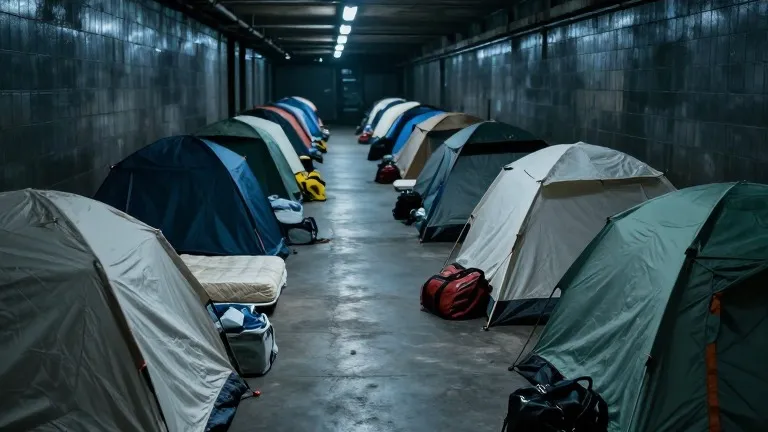
The rising casualty count coincides with a shift in daily logistics for the city's 4 million residents. With insufficient purpose-built shelters, subway stations have become the primary overnight refuge. Roughly 10 people per night set up mattresses and small tents on station floors. Children and pets sleep alongside adults in these temporary quarters.
Halyna, a resident of the Lukyanivka district, takes her 5-year-old son, Roman, to the nearest station most evenings. She often goes even without an active siren. "We're alive," Halyna said. "We've been lucky once again." Her district has faced repeated targeting during the conflict's four years and eight months.
Recent strikes have hit residential and educational sites. In September, a Russian drone struck an apartment building in the central Pechersk district, killing 14-year-old Daniel Umanskyj while he did homework. Vlad, a neighbor in the hallway, said he was late that day, which saved him and his daughter. "These sick monsters don't care who they kill," he said. Flowers now mark the building's exterior in Daniel's memory.
Schools in southwestern Kyiv have also taken direct hits. A drone struck one building in early October, though staff and students were already in shelters. Principal Valentyna Chorna said the school continues in-person lessons because its shelter holds more than 500 students. Attendance depends on siren duration and home proximity.
Physical strikes have disrupted commercial supply chains and public utilities. Attacks on warehouses have created supermarket shortages not seen since the war's early months. Emergency power outages returned at the end of September, and a recent attack temporarily halted subway service. The status of winter heating, electricity, and water supply remains uncertain due to ongoing infrastructure damage.
Local authorities have adjusted civil protections to manage the strain. The curfew now runs from 1 a.m. to 5 a.m. Some facilities operate during yellow alerts. Residents must shelter immediately during red alerts, which indicate ballistic or cruise missile threats or large combined attacks.
The Kyiv International Institute of Sociology reported in early October that 72% of residents surveyed in September said they were prepared to endure the war for as long as necessary. The survey captured sentiment just as the city's shelter networks reached capacity.
Source: Deutsche Welle