SS Richard Montgomery: Rusty Masts Removed to Protect London Waterway
Engineers have dismantled the last visible parts of a WWII shipwreck to prevent structural collapse, while thousands of tons of explosives remain submerged nearby.
By Yasmin Duda ·
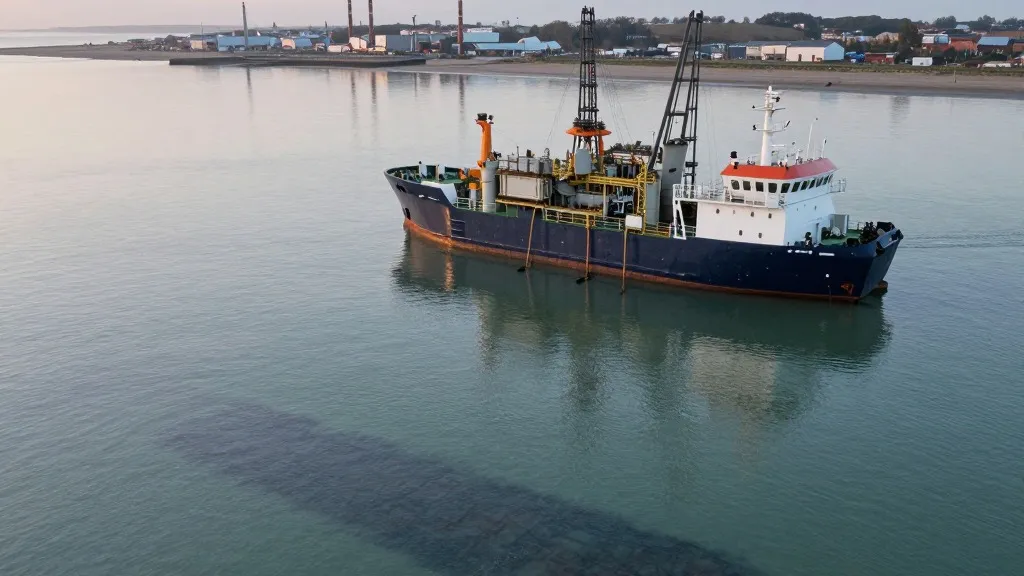
Residents and sailors near the Thames Estuary no longer have to look up at three towering, rusted structures that have marked the landscape for eighty years. The final components of the SS Richard Montgomery, a American vessel from World War II, were successfully detached this week. This completion marks a major step in mitigating a long-standing hazard for the waterway, although the massive cargo of explosives hidden beneath the surface remains exactly where it has been since 1944.
The ship grounded on a sandbar roughly 40 miles from London in August 1944. It was one of approximately 2,700 vessels constructed in the United States to aid the Allied war effort. At the time, the cargo holds contained an estimated 1,500 tons of munitions intended for use following the D-Day landings. The ship broke apart during early salvage attempts and sank, leaving the explosives trapped in its structure for decades.
For generations, the masts served as a navigational landmark and a local curiosity. However, recent engineering surveys indicated that the structure was degrading. Officials grew concerned that the weakening supports could fail, causing the heavy masts to fall directly onto the stored ammunition. Such an impact could potentially trigger a chain reaction.
Nolan Conway, a naval architect with Resolve Marine Group, explained the specific dangers his team faced. The vessel had begun to tilt, increasing the risk that the masts might crash into the cargo. He noted that some of the munitions are believed to utilize pressure fuses, meaning a physical shock could set them off. The primary objective was to extract the masts without introducing vibrations or stress that could compromise the wreck.
To achieve this, engineers designed a specialized lifting frame. This apparatus allowed each mast to be raised vertically without swinging or swaying, ensuring stability throughout the process. Instead of sending divers into the water, the team employed a remotely operated underwater diamond-wire saw. This device uses hydraulic arms to clamp around a mast and cut through it, minimizing human exposure to the hazardous site.
U.K. maritime minister Keir Mather announced to the House of Commons that the project was finished ahead of schedule. The total cost came in just under $13 million. Mather stated that the masts placed a significant load on the remaining structure. Their removal reduces the immediate structural risk and supports the long-term management of the site.
The explosives themselves have not been moved. Removing them would involve substantial risks, and experts continue to debate the potential consequences of a detonation. Estimates vary widely, ranging from minor shoreline damage to a tidal wave traveling up the Thames. Some models suggest the event might only temporarily close a nearby shipping channel. Despite these uncertainties, officials maintain that the overall probability of an explosion remains low.
An exclusion zone has long been maintained around the wreck, which sits about 1.5 miles off the Sheerness coast. This restricted area will remain in place to ensure continuous monitoring and control. The removed masts are now in the care of the Historic Dockyard Chatham museum. They will be displayed there to highlight the ship's historical significance and its role in supporting Allied forces during the war.
Source: CBS News