History and redistricting set the stage for a likely House flip
Polls show only 15% of Americans say their finances improved, while structural advantages limit the scale of potential Democratic gains.
By Ahmed Peterson ·
President Trump’s re-election promise to lower prices has failed to materialize, creating a sharp disconnect between the administration’s platform and voter experience. This economic strain, combined with a war in Iran and new tariffs, has driven up costs for goods and energy. The result is a political environment where the president faces record-low approval ratings and high intensity of opposition.
The economic divide is widening. Wealthy Americans see gains driven by stock portfolios dominated by AI companies. Meanwhile, many working voters struggle with inflation that outpaces wages and rising interest rates. These higher rates make purchasing homes and cars more difficult. A recent NPR/PBS News/Marist poll found that 38% of respondents said their economic situations have worsened, while only 15% said things have gotten better.
Historical data favors the Democrats in this midterm cycle. Since World War II, the president’s party has gained House seats in midterms only twice. When a president’s approval rating is below 50%, their party loses an average of 35 seats. Trump’s approval rating has remained below that threshold. Democrats also performed well in 2025 off-year elections and special races, indicators that often predict midterm performance.
Structural factors may temper the size of Democratic victories. The Cook Political Report lists about 30 fewer competitive districts this year than in 2018. Mid-decade redistricting also shifted the map in favor of Republicans. An NPR analysis estimates that Republican-led redistricting efforts netted the party an eight-seat advantage. Trump explicitly pushed state legislatures to secure these gains, a move that may insulate incumbents in key states.
Republican candidates are adjusting their strategies to reflect the president’s polarizing status. Mentions of Trump in primary advertisements were frequent. In general election ads, those mentions have become nearly nonexistent. Party strategists acknowledge privately that Trump is a double-edged sword. He energizes the base but alienates swing voters. The president has traveled to red states to urge his supporters to vote, aiming to prevent a small Senate pickup from becoming a large one.
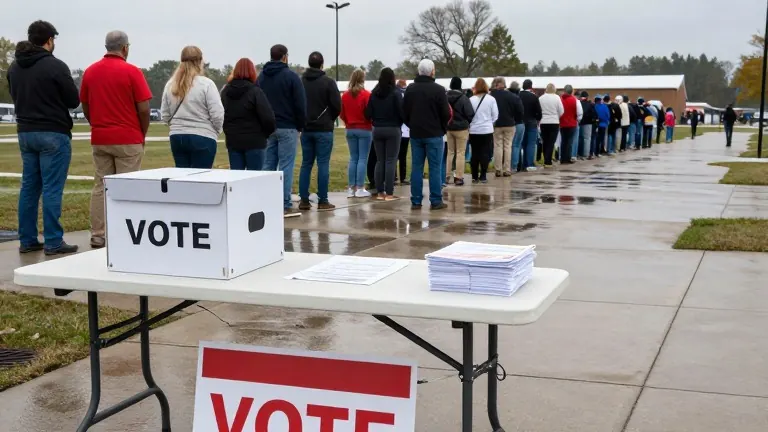
Uncertainty remains regarding how quickly results will be finalized. While many districts will be called on election night, close Senate races could remain undecided for days or weeks. This delay creates an opening for disputes. A quarter of Republicans in the latest poll said their preferred candidate likely should not accept the results if the election is close. Trump has already laid the groundwork for such claims, a pattern he has followed after every unfavorable result.
The political implications extend beyond the November vote. The 2028 presidential cycle begins almost immediately after these midterms. Candidates seeking a national profile may announce their intentions as early as January or February. For now, the focus remains on turnout and the final tally, which will determine whether the Democratic Party secures the House and potentially the Senate.
Source: WCBE