UC San Diego Professor Frames 'Carrie' As A Rape-Revenge Thriller Turning 50
Assistant Professor Silpa Mukherjee examines how the Brian De Palma film blends horror with comedy as it marks its 50th anniversary this October.
By Yasmin Duda ·
UC San Diego film professor Silpa Mukherjee argues that the 50-year-old film 'Carrie' functions as a rape-revenge thriller, a framing that complicates how audiences read the violence carried out by the title character. The Brian De Palma film debuted in October 1976, adapting the first novel by Stephen King. A new miniseries based on the story recently premiered on Amazon Prime.
Mukherjee, an assistant professor of Film and Media Studies in the Literature Department, said De Palma draws on horror traditions to build tension. She noted that the director uses composer Bernard Herrmann's stabbing refrain from 'Psycho' but cuts it short, using only the first half as a sonic cue. "Much of the anticipation of something terrifying is therefore pleasurable," Mukherjee said. The refrain stops halfway through and nothing truly horrifying happens, frustrating expectations.
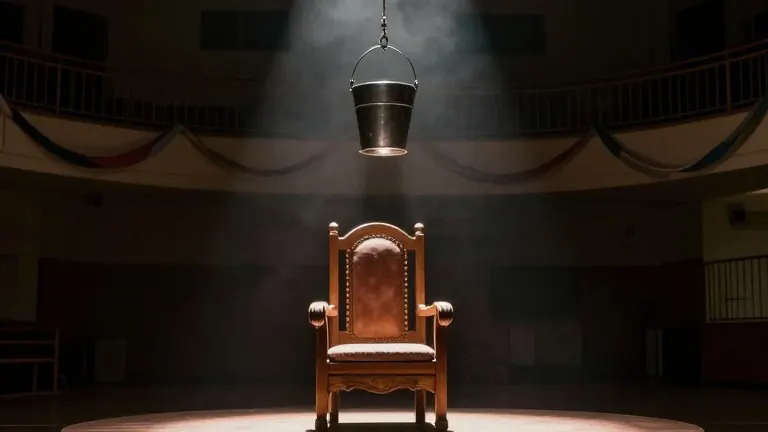
On the mix of horror and comedy, Mukherjee points to the prom scene where Carrie White is named prom queen and then drenched in pig's blood from a suspended bucket. Carrie's silent scream after the drenching is almost indistinguishable from mad laughter, she said. Mukherjee cites William Paul's 'Laughing Screaming: Modern Hollywood Horror and Comedy' on how comedy and horror represent opposite ends of human experience, from the harmony of festive comedy to the graphic violence of the Grand Guignol theatrical tradition.
Mukherjee reads the film as a commentary on how sexual violence in high schools goes unacknowledged. She points to the religious mother's disclosure of her own non consensual impregnation and to the relationship between classmates Chris and Billy. De Palma works the motif of blood throughout, from classmates tormenting Carrie over her first period to the climax where they drench her in pig's blood.
This winter quarter, Mukherjee will teach a film studies and literature course on how horror films address violence, trauma, fantasies and desires. The screening list includes Jordan Peele's 'Get Out' (2017), Guillermo del Toro's 2025 'Frankenstein', 'Under the Shadow' (2016) set in 1980s Tehran during the Iran-Iraq War, the Japanese film 'Ring' (1998), and 'Mercy, the Mummy Mumbled' (1918), an early film made by Black filmmakers. Mukherjee is completing her first book, 'Cinema Contraband: The Corridor Connecting Bombay to Dubai', on how law systems tolerate and generate criminality that serves state social control. Her work has been supported by fellowships from the Society of Hellman Fellows, UC San Diego's Suraj Israni Center for Cinematic Arts and the National Endowment for the Arts.
Source: UC San Diego Today