UK shoppers load carts with beans, water, and radio as Be Ready campaign kicks off
Official guidance encourages residents to stockpile food, water, and power sources to prepare for potential disruptions from climate events and geopolitical threats.
By Enzo Conti ·
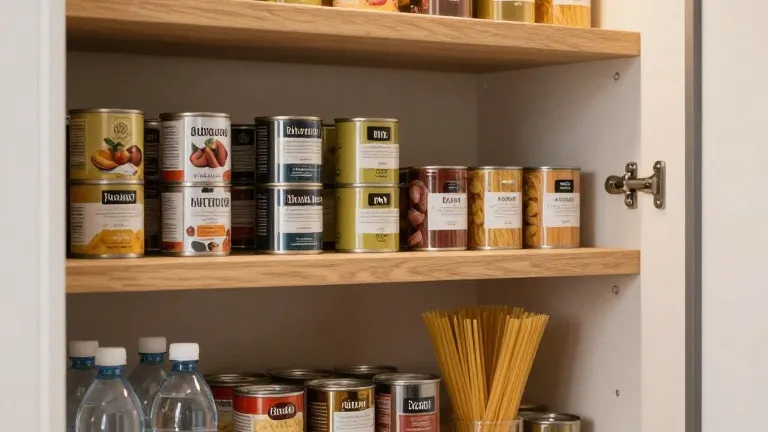
The UK government launched the Be Ready campaign on Thursday, advising households to maintain a three-day supply of essential goods to withstand potential emergencies. The directive aims to prepare residents for disruptions caused by Russian state-sponsored terrorism and the accelerating impacts of the climate crisis. While some families began preparing months ago, the official announcement has accelerated a trend of gradual stockpiling across the country.
Lawrence Barratt in Hythe, Hampshire, began adding tinned beans, soups, noodles, and rice to his weekly shopping list about two weeks after seeing the government's online advice. He is purchasing bottled water in parallel to ensure his two-person household can cook meals without relying on the tap. Barratt also secured a first aid kit, a battery-powered radio, and a portable power bank. He stated the campaign made him realize he "would be completely unprepared for anything," a sentiment echoed by memories of the empty shelves during the 2020 lockdown.
In Greenwich, London, Marco Camurri and his family have been preparing for several months, initially prompted by reports of supply chain disruptions linked to El Niño. Their stockpile includes pasta, passata, stock cubes, medicines, and toilet paper. Camurri maintains a fuel level above 50 percent, allowing for roughly 300 miles of driving, and stores wood in his garden for heating water. The family now tracks expiry dates in a spreadsheet to rotate their supplies, a strategy Camurri described as equivalent to one extra week of staple shopping.
Jack Davenport in North Shields cited El Niño and "Russian shadow threats" as primary motivators for his family's preparation. He argued that the country's infrastructure is "creaking and outdated," making it vulnerable to climate disasters and energy insecurity. Davenport suggested the government is using the campaign to "reduce long-term panic" by framing these risks as manageable rather than catastrophic, noting that several generations have not faced the hardships common before the war.
Deirdre O'Sullivan in Leicester offered a more skeptical view, calling the guidance "daft" and comparing it to 1970s nuclear advice to hide under a table. She argued that the three-day target is inadequate for a genuine emergency, suggesting that water safety issues would be identified more precisely and that food shortages would unfold over a longer period. O'Sullivan characterized the policy as a bureaucratic measure, similar to what the fictional minister in Yes Minister might propose to demonstrate that a policy exists, even if it is "clearly totally useless."
Source: The Guardian