Houthis claim Riyadh airport hit
Yemeni rebels say they struck a major Saudi hub while the UN warns of a security gap in Lebanon.
By Ahmed Peterson ·
The Middle East remained volatile on Wednesday, with Iran-backed rebels asserting new attacks on Saudi territory while international leaders assessed the risks of a withdrawal in southern Lebanon. These developments occurred as U.S. political shifts in Washington influenced diplomatic calculations regarding the ongoing conflict with Tehran.
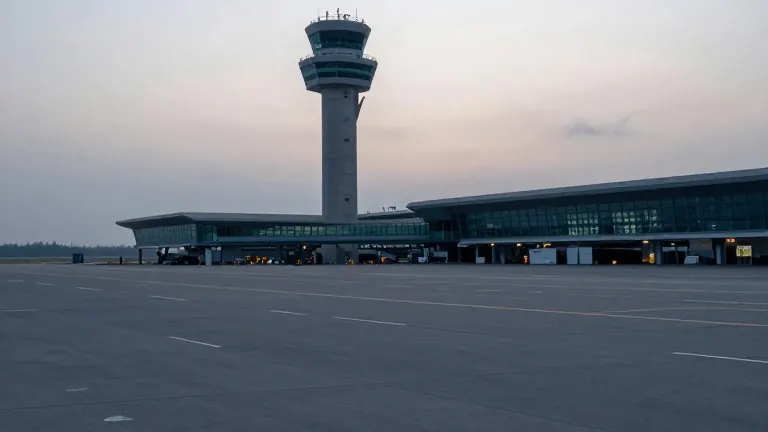
Yahya Saree, the military spokesperson for the Houthis in Yemen, stated that the group fired a ballistic missile at King Khalid International Airport in Riyadh. Saree claimed the impact caused major damage to the facility. The rebels also reported launching a drone at a radar site and a second ballistic missile at a command center in Jazan province. The Associated Press could not independently verify these claims, and the Saudi information ministry had not responded to requests for comment by midday.
Saudi civil defense officials issued alerts in Riyadh overnight and early Wednesday, warning of potential danger in the regions of Jazan and Najran. This pattern of targeting logistics and air hubs continues as part of the Houthi strategy to counter what they describe as a Saudi blockade of Yemen. In a separate incident, Houthi health authorities reported that an airstrike in the Taiz province killed at least seven people, including two children. The strike hit a house in the Maqbanah district, and the group blamed Saudi Arabia for the attack.
In Lebanon, Jean-Pierre Lacroix, the head of UN peacekeeping, warned that the end of the UNIFIL mission on December 31 could leave a security vacuum. Lacroix noted that Lebanese officials fear the Israeli forces and the Lebanese army will be positioned face to face without a third-party presence to monitor the Blue Line. He questioned how unarmed UN observers could effectively support communities and prevent clashes without protection. The UN Security Council is scheduled to discuss the 2000 resolution governing the mission on November 19.
In Tehran, thousands of protesters marched through the capital to mark the anniversary of the 1979 U.S. Embassy takeover. Participants burned American and Israeli flags and chanted slogans calling for the deaths of both nations. Mohammad Bagher Qalibaf, Iran’s chief negotiator and parliament speaker, posted on X that Americans had rejected war in the recent U.S. election. He warned that if the U.S. government ignored the vote for change, it would face a nightmare. Conversely, Ayatollah Mojtaba Khamenei dismissed the idea that the United States would alter its approach to Iran.
The Israeli military reported a drone strike in the village of Qabrikha in southern Lebanon. The attack targeted a motorcycle, killing one person and wounding another. The military stated it struck two suspects who were observing soldiers. This was the first such strike in nearly a month, following a U.S.-brokered ceasefire in late June that ended the latest conflict between Israel and Hezbollah.
Source: Orange County Register