US hits Iranian targets in Strait of Hormuz as gas prices fall
Defensive strikes occurred Monday, the day before U.S. midterm elections, while diplomatic talks continue in the background.
By Yasmin Duda ·
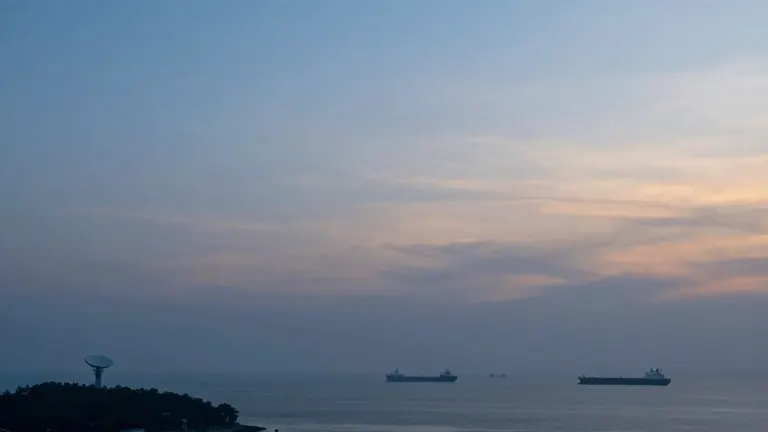
Gasoline prices fell sharply on Monday as the United States conducted defensive strikes against Iranian targets in the Strait of Hormuz. The drop in oil costs offers a brief economic relief to American households just one day before the midterm elections.
A U.S. official spoke on the condition of anonymity to confirm the strikes. The official stated that the U.S. targeted Iranian surface-to-air missiles that were being used against American assets. Iranian state television reported that explosions were heard on Qeshm Island during the attacks.
The military action was described as limited rather than a full return to hostilities. This timing is delicate for the administration, which has faced pressure from voters over the cost of the conflict. The war has cost U.S. taxpayers at least $47 billion and has contributed to higher energy bills.
Vice President JD Vance addressed reporters in Washington earlier on Monday. He said he spoke with President Donald Trump about the situation with Iran about an hour prior. Vance noted that both he and the president feel positive about the chances of reaching a negotiated settlement. He emphasized that the administration is focused on securing a verifiable commitment from Iran to stop rebuilding its nuclear program.
Diplomatic efforts are moving in parallel with the military actions. Qatari mediators held two rounds of talks with Iranian officials last week. These discussions aim to create a framework where Iran stops attacking shipping in the Strait of Hormuz in exchange for the U.S. lifting its blockade of Iranian ports. More talks are scheduled for this week.
Regional dynamics are complicating the decision-making process in Washington. Israeli Prime Minister Benjamin Netanyahu pushed for a new wave of strikes during a phone call with Trump over the weekend. Netanyahu seeks to form an emergency government after his coalition lost its parliamentary majority in last week's Israeli elections. However, other Middle East allies are warning against further strikes, citing risks to regional stability.
Saudi Defense Minister Prince Khalid bin Salman spoke by phone with U.S. Secretary of Defense Pete Hegseth on Monday. They discussed the latest regional developments and the continued attacks by Houthi rebels in Yemen on Saudi Arabia. The U.S. has been monitoring the situation as Houthi attacks on Red Sea shipping could increase if the conflict escalates.
In Tehran, the new supreme leader Ayatollah Mojtaba Khamenei met with military chiefs. He instructed that any threat from the U.S. or Israel should be met with an immediate response without geographic limits. Iran’s security chief Mohsen Rezaei told state television that the tone from the U.S. has changed for the better. He confirmed that Iran received a letter from Vance last week but has not responded yet.
China plans to send a special envoy to Iran, Oman, and Saudi Arabia in early to mid-November. The move signals that major global powers are closely watching the negotiations. The U.S. and Iran continue to exchange signals as they navigate the gap between military readiness and diplomatic opportunity.
Source: Las Vegas Sun