New Utah Dig Reveals Dinosaur Community After Major Extinction
Fossils from the Ironstone Bonebed in Grand County offer a rare window into the recovery of North American species following the end of the Jurassic Period.
By Ahmed Peterson ·
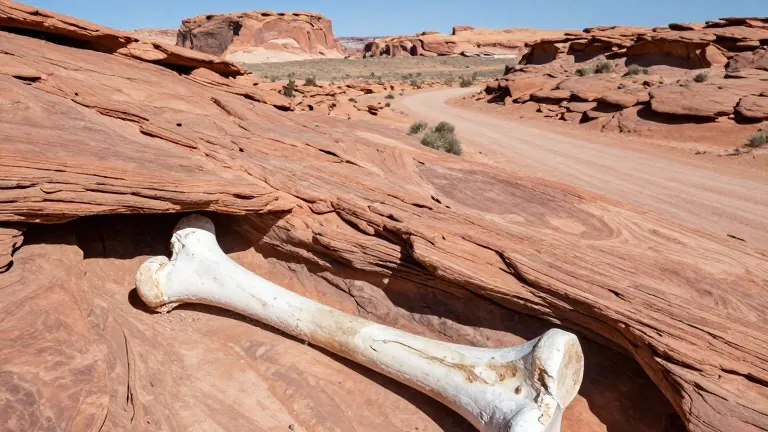
Utah State Paleontologist Jim Kirkland and Assistant State Paleontologist Don DeBlieux have uncovered fossils at the Ironstone Bonebed that may explain how dinosaur populations recovered in North America after a major extinction event. The site, located on Bureau of Land Management land near the northern edge of Arches National Park, is estimated to be between 138 and 141 million years old. This places the remains in the early Cretaceous Period, a timeframe that followed the Jurassic.
The team identified remains from at least four types of dinosaurs, including an armored species, an iguanodont plant-eater, and two meat-eaters of different sizes. They also found turtle material that requires further analysis. These finds add to decades of research in northern Grand County, which the Utah Geological Survey identifies as the location of North America’s oldest known Cretaceous dinosaur communities. Kirkland argues that an extinction at the end of the Jurassic reshaped local ecosystems, wiping out familiar species like Allosaurus and Stegosaurus.
“It’s the only place in the world where we can study the recovery,” Kirkland said. Scientists continue to debate whether these changes occurred in a single rapid event or over a longer period. Some groups that vanished from North America survived in other regions. Kirkland believes the Ironstone site is contemporaneous with Doelling’s Bowl, a bonebed located about six miles east where the team has excavated for 18 field seasons. He bases this estimate on similar armored dinosaur remains and their position within the rock layers. Across these nearby sites, researchers have identified eight or nine distinct dinosaur kinds.
“None of them are like what we see in the Jurassic, so it makes it real exciting,” he said. The geological forces that shaped Arches National Park also preserved this record. Ancient salt deposits shifted beneath the region, pushing rock upward into folds and creating low areas where sediment accumulated. This process trapped fossils from a period poorly documented elsewhere. The landscape these dinosaurs inhabited was likely wetter than the current desert, with a climate comparable to the modern Gulf Coast.
DeBlieux first spotted fossils at Ironstone about 20 years ago during a rainy prospecting trip near Utahraptor Ridge. He collected an armored dinosaur’s upper arm bone and shoulder blade but saw little else to pursue. Work on describing an armored dinosaur from Doelling’s Bowl prompted the team to return in the fall of 2025. “We didn’t come back here for 20 years because it was just two bones over there, and we didn’t see much else. And then last year, we saw that there was quite a bit more coming out,” DeBlieux said.
By Oct. 20, the crew had spent roughly a week at the site before packing up ahead of approaching rain. They collected weathered surface fossils and mapped their locations to help reconstruct the original bone positions. DeBlieux noted that water may have washed the remains into the sediment rather than leaving complete skeletons in place. To protect fragile specimens, the team encased them in plaster jackets, a process that can require weeks of laboratory preparation. The fossils are expected to be prepared at Utah State University’s Prehistoric Museum in Price, in collaboration with curator Joshua Lively.
DeBlieux plans to retire from the Utah Geological Survey in December after 25 years but intends to continue fieldwork and research. Kirkland and colleagues are working to name an armored dinosaur from Doelling’s Bowl in DeBlieux’s honor. Kirkland suspects similar remains at Ironstone belong to the same species, though more evidence is needed. The deposits around Ironstone could support more than 100 years of work at the team's current pace of excavation.
Source: The Salt Lake Tribune