USDA Announces $15 Billion Package for Farmers Before Midterm Elections
The aid includes an $8 billion one-time diesel subsidy and $5 billion in guaranteed loans, arriving two days after President Trump visited Iowa and Kansas.
By Yasmin Duda ·
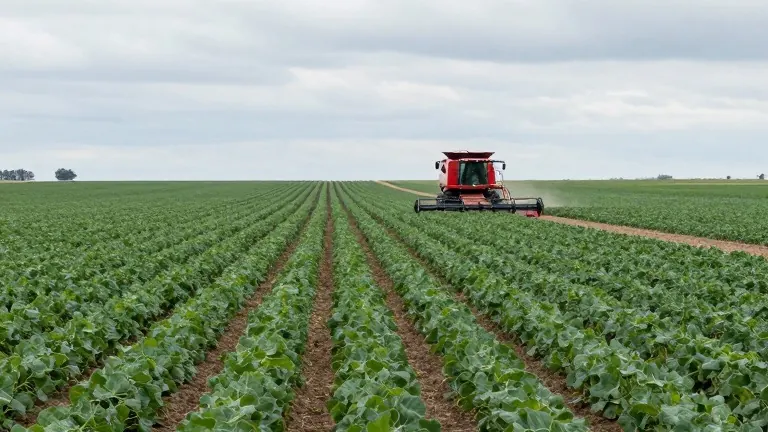
The United States Department of Agriculture has committed $15 billion in new support for agricultural producers in the weeks leading up to Tuesday's legislative elections. The package is designed to offset the rising costs of diesel and fertilizers, expenses that have surged due to tariffs and the war in Iran. These financial measures arrive just two days after President Donald Trump visited Iowa and Kansas.
Of the total amount, more than half will fund an $8 billion one-time payment plan for farmers affected by high fuel prices. The USDA stated that it would release further details on these payments this month, though the exact timeline for when money reaches farmers remains unclear. Farmers rely on diesel for tractors, trucks, and harvesters, making fuel a critical operational cost.
The agency also announced $13.8 billion in safety net program payments for eligible producers starting with the 2025 harvest year. These payments aim to cover deficits for growers of key crops, including corn, soybeans, wheat, and rice. Additionally, at least $5 billion in guaranteed loans will be available to ranchers and fishers.
Further allocations include $1.8 billion for landowners and producers who participated in conservation programs, $573 million for fertilizer manufacturing projects, and $57 million to expand meat processing facilities. The USDA also set aside $86.6 million in grants for innovative projects involving specialized crop producers. On Thursday, the agency reported it would purchase up to $472.5 million in agricultural products to support producers and distribute them to charitable programs.
Diesel prices averaged $6.32 per gallon on Friday, according to the American Automobile Association. This price is 70 percent higher than the average from a year ago, though slightly below the peak reached in September. For a farmer filling a 100-gallon tank, the cost is now $260 more than it was twelve months prior.
Gregg Ibendahl, an agricultural management specialist at Kansas State University, estimated that the new payments would more than cover the increase in fuel costs. He suggested the funds could also help with elevated fertilizer prices. However, he noted that these one-time payments do not address the underlying issues driving price pressures in the sector.
Alexandra Middlewood, an associate professor of political science at Wichita State University, reported mixed reactions from farmers. Many are relieved their operations can survive the year, but many view the programs as short-term rescues rather than long-term solutions. Middlewood observed that rural voters face high costs of living and healthcare, and while some may not switch to the Democratic Party, they may choose to abstain or vote for independent candidates.
Michael Smith, a political science professor at Emporia State University, explained that while many rural voters admire the president, some of his policies have harmed the agricultural industry. Deportations have threatened the labor force, and cuts to foreign aid and SNAP benefits have impacted the market for agricultural goods. Smith noted that the president is not on the ballot this year, but his policies are.
Source: KTVW-DT
More Business · Bad Service · Report a business · Got a Story?