10 Needles, 5 Grams, and a Baby Catheter: The Mechanics of Pike's Survival
Legal filings reveal the execution team struggled for an hour to find a vein, using equipment experts say was too small to deliver the fatal dose.
By Yasmin Duda ·
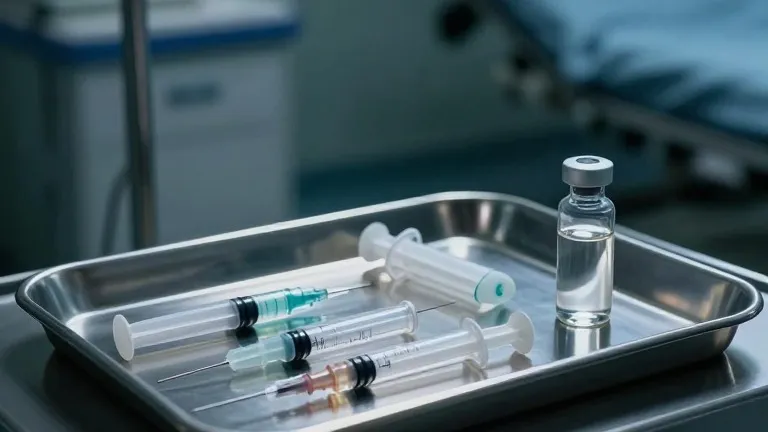
Christa Pike survived a lethal injection in Tennessee because the medical team could not find a vein large enough to hold the drug. She is alive, walking, and talking, having returned to her prison cell after 10 days in a hospital where she spent time on a ventilator. The state has paused all executions while it reviews the procedure that failed to kill her.
New details filed in court on Thursday quantify the struggle. Randy Spivey, Pike's attorney, provided a timeline of events from 30 September. The record shows the IV team inserted approximately 10 needles into Pike's arms over a period of nearly an hour. They were attempting to place a line for 50cc of pentobarbital in each arm, a total dose of 5 grams.
The team relied on a 24-gauge needle, a size Joel Zivot, a professor of anesthesiology and surgery in Atlanta, described as suitable for a baby or small child. Zivot testified that pushing a 50cc syringe through such a small catheter would cause the vein to blow. At 7:07 pm, a team member stated, "I think it is blown." Despite this, the team continued the attempt.
Pike reported her arm was "really burning" several times during the procedure. Jonathan Groner, an emeritus professor of clinical surgery at Ohio State University, noted that protocol requires stopping the infusion immediately if a patient complains of pain. The team also used ultrasound to locate veins, a technique Groner said requires extensive specialist training. He observed the team did not know how to use the device properly.
At 7:23 pm, saline was pushed through the line "with difficulty." One minute later, at 7:24 pm, the team declared the IV set and began the injection. Groner argued that no clinician would administer a caustic drug through a line that does not flush easily. He described the scene as having "no plan in sight" and called the conduct "astounding" incompetence.
Pike was sentenced to death in 1995 for the murder of classmate Colleen Slemmer. Her lawyers had warned the state beforehand that her veins were small and compromised. Zivot cited a poorly written protocol and a lack of leadership as key failures. Pike now walks and talks, though her long-term medical prospects remain unknown.
Groner and Zivot both said the case exposes flaws in lethal injection, the primary execution method in the US. Groner called the process a "medical charade." He emphasized that the penalty is death, not torture. Zivot stated the team continued when they should have stopped, noting that medicine relies on safety and accountability, which were absent in the chamber.
Source: The Guardian