Afghan farmers push opium production into Pakistan and Iran
Satellite data identifies more than 9,000 hectares of new poppy fields in Balochistan as Afghan growers cross the border to lease land.
By Yasmin Duda ·
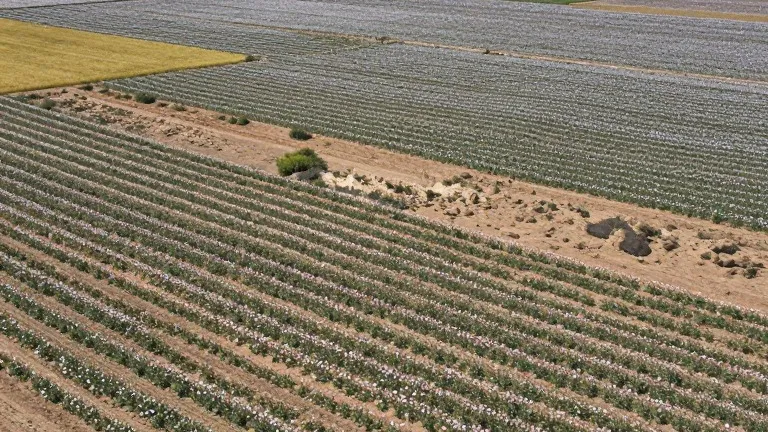
Afghan opium growers are leasing land in Pakistan and Iran, driving a sharp rise in poppy cultivation along the tri-border region. Satellite imagery from the British firm Alcis identified more than 9,000 hectares of poppy fields in Pakistan's Balochistan province. David Mansfield, a UK-based expert on the illicit drugs trade, stated that the remote borderlands have become a global center for opium production. This shift follows the Taliban's 2022 ban on narcotics in Afghanistan, which caused domestic output to fall but did not eliminate farming.
The expansion began after the Taliban imposed the ban in 2022. Production initially dropped within Afghanistan but persisted in specific regions. By 2025, Afghan farmers from Kandahar and Helmand provinces began crossing into neighboring countries. They brought capital and agricultural expertise, investing in infrastructure such as solar-powered wells in Balochistan. In Iran, Afghan farmers are working as tenants and sharecroppers in provinces including Sistan-Baluchistan and Razavi Khorasan.
In Balochistan, the new cultivation is concentrated in the districts of Loralai and Killa Abdullah. Abdul Qahar Wadan, a former National Assembly member, claimed that senior military officials and government power brokers take commissions from growers. Monawar Hussain, the district's chief administrative officer, disputed this, citing a decline in crops after an eradication campaign last year. However, Alcis imagery from 2026 shows no clear evidence of that eradication. A farmer in Killa Abdullah reported that growers pay bribes to local authorities through intermediaries. Lala Jan Kakar, a resident, noted that drought and insecurity have destroyed traditional fruit farming, making poppies a more reliable income source.
Iranian authorities have been unable or unwilling to destroy the 2026 crop due to the ongoing war against the United States and Israel since late February. Satellite images show extensive fields in Sistan-Baluchistan using drip irrigation, a costly investment that indicates growers expected little risk of removal. Mansfield described a shift from mixed farming to large-scale poppy monoculture in both countries. Afghan farmers are devoting large plots entirely to poppies rather than diversifying crops.
Production is also rebounding inside Afghanistan. Farmers in Badakhshan Province, which accounts for about half of national output, have defied the ban due to drought and debt. Mansfield noted that southwestern cultivation almost doubled between 2025 and 2026, with crops hidden in wheat fields and behind compound walls. The Taliban issued a directive barring home searches for poppies without a court order, a move experts view as a concession to avoid unrest.
Many farmers in Balochistan doubled their cultivated land in 2026. Mansfield called this a stark indication that cultivation levels will rise in 2027. He warned that growing numbers of farmers in Afghanistan's southwest may interpret the home search directive as a signal that the authorities will tolerate cultivation beyond walled compounds. If that perception holds, Afghanistan could see a dramatic rise in opium production next year. Armed groups in the region compete for tax revenues from the drugs trade, people smuggling, and fuel and mineral exports.
The United Nations Office on Drugs and Crime estimates that opium production in Pakistan remains marginal. The agency acknowledged that scarce regional data and sharp rises in eradication figures point toward spillover effects. Pakistan's Interior Ministry and the provincial government did not respond to requests for comment. Islamabad has denied reports of widespread cultivation and insists that any poppy crops found have been destroyed.
Source: RFE/RL
More Business · World news · Bad Service · Report a business · Got a Story?