Fake IDs, Fake Pianists: Music's 21st-Century Fraud Files
From a Scottish rap duo posing as Californians to a classical pianist's borrowed recordings, NPR Music staff recount the deceptions that reshaped artists' careers.
By Yasmin Duda ·
Authenticity sells, but the music industry has repeatedly bought the counterfeit version. In 2026, generative AI and suspiciously fast chart climbs have made questions about what is real harder to answer, and NPR Music staff have assembled a catalogue of 21st-century deceptions they found most instructive.
The clearest financial payoff came for a pair of Dundee rappers. Gavin Bain and Billy Boyd were dismissed at a 2001 Polydor Records audition as "the rapping Proclaimers" and rebuilt themselves as Americans. Sony UK signed them as Silibil N' Brains, claiming Huntington Beach, California origins and a San Francisco rap-battle meeting. The duo opened for D12 at Brixton Academy at their peak and kept the ruse running for two years before Boyd returned to Scotland in June 2005; Bain stayed in character until a 2007 stage reveal. "Eventually, we couldn't come out of character," Bain told NPR in 2010.
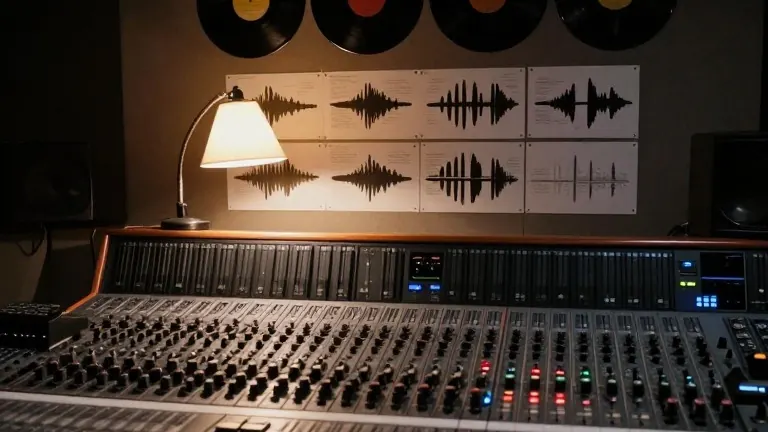
Classical recording offered a different kind of forgery. Joyce Hatto released roughly 100 albums on her own label from the late 1980s until her death in 2006 at age 77, produced by her husband, record producer William Barrington-Coupe. Richard Dyer wrote in The Boston Globe, "Joyce Hatto must be the greatest living pianist that almost no one has ever heard of." A Gramophone reader discovered in 2007 that a Hatto Liszt disc was catalogued as a performance by László Simon, and an audio expert matched waveforms to recordings by other pianists. Barrington-Coupe admitted in February 2007 that he had substituted other players' work, altering speeds on some tracks, to cover for his wife's declining health.
Rick Ross faced exposure rather than fabrication. A 2008 photograph showed the rapper, born William Leonard Roberts II, in a Miami-Dade County correctional officer's uniform. His album Trilla had debuted at No. 1 on the Billboard 200 in March of that year, and 50 Cent released diss tracks including "Officer Ricky" after the image surfaced. Ross initially blamed "online hackers putting a picture of my face when I was a teenager in high school on other people's body." The Smoking Gun later confirmed 18 months on the job. His 2009 album Deeper Than Rap also debuted at No. 1, and 50 Cent later said, "The most difficult beef to have is when the person you're beefin' with is law enforcement."
Lana del Rey's 2012 debut Born to Die arrived after "Video Games" spread from a low-resolution webcam clip posted while she was unsigned, prompting scrutiny of her retro styling and Old Hollywood influences.
The Hatto case involved substitution, the Scottish duo involved identity, and Ross involved a record that contradicted a persona each artist had built. Each relied on a gap between what an artist presented and what records could verify, a gap that closed as digital footprints spread.
Bain and Boyd's deception unfolded before extensive online records could expose them. A James McAvoy-directed feature film about the duo, based on Bain's 2010 memoir, was released in the United States this year. Billy Boyd told a British newspaper earlier in 2026, "I think Gavin is still chasing something, still looking for his identity in that. And that's great for him - it's a great marketing ploy."
The 2007 admission by Barrington-Coupe stands as the point where the Hatto catalog's authorship was formally reassigned. Gramophone's expert comparison of soundwaves matched Hatto's releases to recordings by László Simon, Yefim Bronfman and Carlo Grante, among others.
Source: KPBS