Georgia Records 5.5 Million Tourist Visits Amidst Two-Year Protest Crisis
While opposition groups march against Georgian Dream's suspension of EU talks, the country saw an 8.4% surge in international visitors in 2025.
By Enzo Conti ·
More than 5.5 million international visitors arrived in Georgia during 2025, according to data from the Georgian National Tourism Administration. This figure represents an 8.4% increase over the 2024 total and stands nearly ten times higher than the approximately 560,000 visitors who traveled to the country two decades ago.
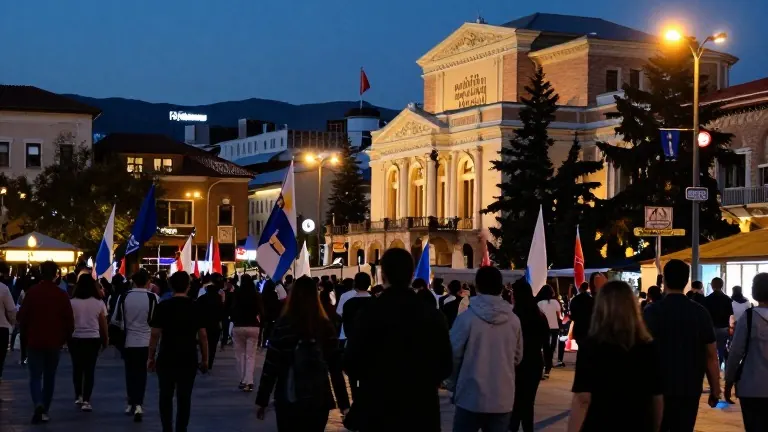
The surge in tourism coincides with a deepening political fracture in the capital. In Avlabari Square, located in Tbilisi’s Armenian quarter, crowds gather every weekend for the “Saturday March.” Protesters walk toward the Bridge of Love, cross into Freedom Square, and march on parliament. They chant slogans directed at the government of Prime Minister Irakli Kobakhidze.
The primary target of these demonstrations is Georgian Dream, the ruling party that has held power since 2012. Critics accuse the party of authoritarian tendencies and cite its decision to suspend EU accession talks as evidence that Georgia is drifting back toward Moscow. The party had previously secured EU candidate status for the nation in 2023.
The current unrest marks two years since the contested parliamentary elections held on October 26, 2024. Protests erupted two days after that vote and reached their peak on November 28. At that time, the government declared it would not place the opening of EU negotiations on its agenda before the end of 2028.
This political tension exists alongside a booming service sector. Tourists from Europe, the Middle East, and Russia flock to the country for its historic sites, post-Soviet aesthetic, and landscapes. The influx has been driven in part by Russian citizens who relocated after the 2022 invasion of Ukraine. Tens of thousands moved to Georgia, bringing capital and opening businesses, which increased pressure on the property market as buyers purchased homes across the country.
Local residents often view this economic dependence with suspicion. Many remember the wars against Russian-backed separatists in South Ossetia and Abkhazia during the early 1990s, as well as the brief conflict with Moscow in August 2008. Consequently, a segment of the population continues to regard Russia as an occupying power, even as Moscow remains a key economic partner.
Georgia, a republic roughly the size of Ireland with a population under 4 million, emerged from the Soviet Union in 1991. The country sits between Russia and Turkey, sharing borders with Armenia and Azerbaijan. Its attractions include mountain villages along the Georgian Military Road, ancient Orthodox churches, and the cosmopolitan capital of Tbilisi, which features a vibrant underground scene and repurposed industrial spaces.
The nation’s economic health presents a mixed picture. GDP grew by 7.5% in 2025, marking five consecutive years of expansion. This growth is fueled by trade, tourism, remittances, Russian capital, and energy imports. However, the economy still suffers from unemployment, low wages, and widespread poverty, with rural areas facing depopulation.
Diplomatic relations with Brussels have deteriorated as the EU criticizes the government’s record on the rule of law and political repression. The relationship with Russia is defined by a contradiction. Diplomatic ties were severed after the 2008 conflict, which led to Russian military control over Abkhazia and South Ossetia, regions that account for approximately 20% of Georgian territory. Yet, economic reliance on Moscow persists.
Source: The Guardian