Israel Election: Candidates Align on Gaza, Split on Courts and Drafts
Voters choose between Netanyahu’s hard-right bloc and a rival coalition, with both sides maintaining similar stances on the war and Palestinian statehood while diverging sharply on domestic governance.
By Ahmed Peterson ·
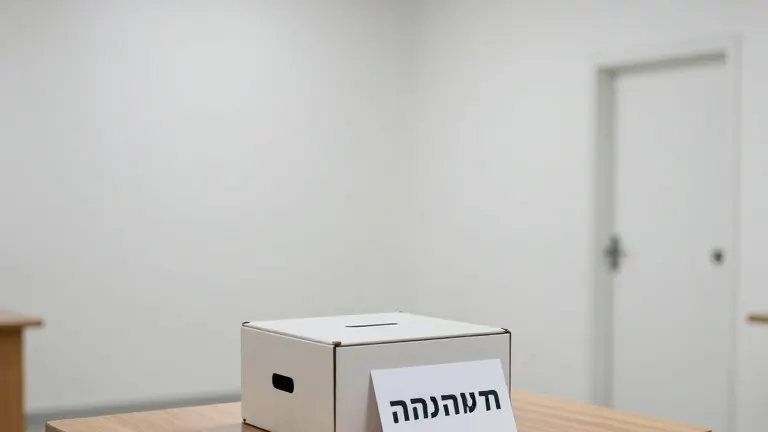
Israeli voters cast ballots on Tuesday in a general election that determines the direction of domestic governance while the war in Gaza continues. The leading candidates share largely similar positions on the conflict and the future of Palestinian statehood, leaving the primary contest to center on internal political structures and military service obligations.
The frontrunners have not challenged the war strategy initiated after the Hamas-led attack of October 7, 2023, or the subsequent military engagement with Iran. Most have also failed to propose a clear path toward a two-state solution. Prime Minister Benjamin Netanyahu stated that there will be no Palestinian state, while Gadi Eisenkot of the Yashar party described the principle of two states for two peoples as a mistake. Finance Minister Bezalel Smotrich urged the next government to cancel the Oslo Accords and pursue sovereignty over occupied territory.
The judicial system is the central point of contention between the camps. The current government, which took office in 2022, passed measures in July to strip Attorney General Gali Baharav-Miara of significant powers, allowing the executive branch to reject legal advice and select its own lawyers. These changes are scheduled to take effect after the election. The opposition coalition has vowed to reverse these measures immediately upon taking power. Naftali Bennett, co-leader of the Together alliance, pledged to cancel the legal revolution laws as soon as the Knesset convenes.
Conscription of the ultra-Orthodox population has become a defining issue as the costs of the wars rise. Netanyahu relies on the Shas and United Torah Judaism parties for Knesset support, both of which demand legislation to shield ultra-Orthodox youth from the draft. This follows a Supreme Court ruling on June 25, 2024, that altered the legal framework for conscription. Shas leader Aryeh Deri stated his party would not join any government unless the status of yeshiva students is regulated. Eisenkot characterized the vote as a choice between a government that dodges drafts and one that enforces conscription.
The current government has also boycotted Chief Justice Isaac Amit, a move critics describe as an assault on democratic checks and balances. Netanyahu argued that the people, not the judges, should hold ultimate power. Justice Minister Yariv Levin called the election a historic opportunity to complete the judicial reforms. The government’s position contrasts with the opposition’s promise to restore judicial independence and reverse the recent legislative changes.
Accountability for the October 7 attack has dominated the campaign, even as the death toll in Gaza, which exceeds 74,000, remains absent from the main policy platforms. Chief of Staff Herzi Halevi resigned in January 2025 following inquiries into security failures, and Shin Bet head Ronen Bar left in June 2025 after a dispute with the prime minister. No comparable inquiry has examined Netanyahu’s role, despite reports that the UAE and Egypt issued warnings before the attack.
Eisenkot claimed Netanyahu was warned and did not act, promising a State Commission of Inquiry. Netanyahu told the Knesset his government wants an inquiry with broad public support. The proposed government-led inquiry was deferred to the next session after failing to reach its final reading in the current term.
Source: Al Jazeera