Trump and Clinton campaign in the South as early voting surges
Alaska prosecutors probe a naming scheme in a tight Senate race while Michigan Democrats clash again over strategy.
By Ahmed Peterson ·
The midterm election will decide which party controls Congress for the final two years of President Donald Trump's term. On Friday, the president and former President Bill Clinton campaigned in neighboring states to mobilize their respective bases.
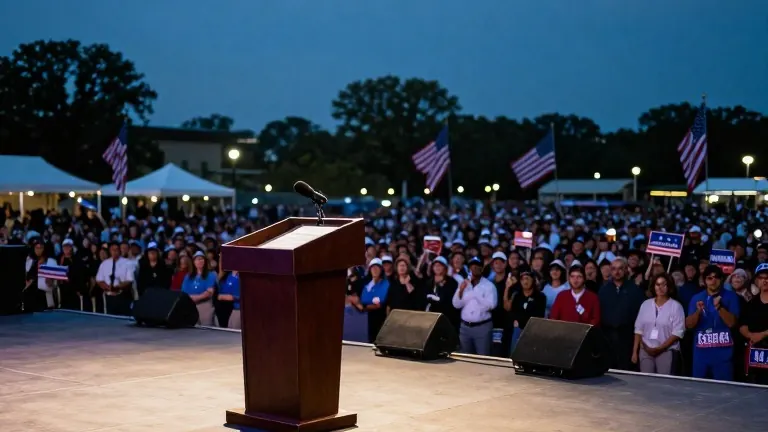
Trump addressed supporters in Daytona, Florida, declaring these to be the most important midterm elections ever. He briefly canceled weekend visits to Iowa and Kansas but rescheduled back-to-back rallies for Sunday in both states. Trump told the crowd in Daytona that he had thought he could relax after twenty-eight consecutive days of campaigning.
Two states away in Tupelo, Mississippi, Clinton invoked a Republican president to urge voters to participate. He cited George H.W. Bush's assertion that democracy is self-correcting and asked the audience to vote for Democratic Senate candidate Scott Colom. Clinton ended his remarks by challenging the crowd to test that belief through their ballots.
Voting data indicates a sharp increase in early participation compared to the 2022 election. An Associated Press analysis found that nearly 10 million more Americans had cast ballots five days before Election Day than at the same point four years ago. Texas saw more than 6.3 million early votes as of Wednesday, a 50% jump from the 4.2 million recorded at this stage in 2022. Early voting also rose more than 30% in Maine, Michigan, North Carolina, and Kansas, while South Carolina reported an 83% increase.
Federal authorities have confirmed a criminal investigation in Alaska regarding a candidate with the same name as the Republican incumbent, Sen. Dan Sullivan. U.S. Attorney Michael Heyman stated that law enforcement resources were sent to the state after reports indicated Democratic Senate candidate Mary Peltola's campaign recruited Dan J. Sullivan to join the race. The Justice Department aims to isolate ballots ranking the lookalike candidate to measure voter confusion. Peltola denied on Thursday that she knew about the effort to add the second Sullivan to the ballot.
Political conflict in Michigan has intensified in the final week of the general election. Rep. Haley Stevens, who lost the August primary to progressive Abdul El-Sayed, appeared on CNN to reaffirm her support for El-Sayed while urging him to repair ties with Jewish and Black voters. Stevens later posted a statement criticizing El-Sayed's response to an advertisement linking U.S. support for Israel to grocery prices. El-Sayed responded by noting that Stevens seemed intent on relitigating the primary and asked Democrats to focus on defeating Republican opponent Mike Rogers. Rogers praised Stevens on social media, saying her call for El-Sayed to address the ad was absolutely right.
The election has centered on affordability and the president's unpopularity. Historic amounts of funding have been directed to this year's races. Republicans have expressed concern that their voters may stay home due to dissatisfaction with current leadership and high costs, issues Democrats have emphasized in their messaging.
Source: The San Bernardino Sun