France assigns 70,000 officers to secure second wave of student-led protests
Authorities increased police presence by 20 percent after riots on October 17 damaged thousands of businesses and led to over 2,000 arrests.
By Yasmin Duda ·
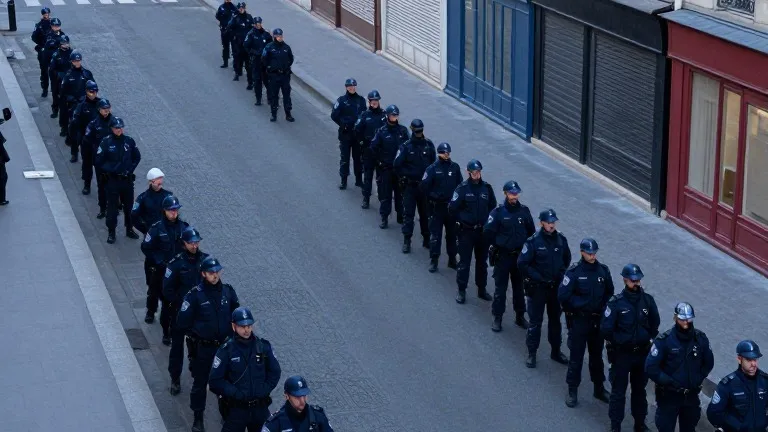
French authorities deployed more than 70,000 police officers and gendarmes nationwide on Saturday to manage a second wave of mass demonstrations. The security operation aimed to prevent a repeat of the violent clashes that occurred on October 17, when thousands of businesses were damaged and more than 2,000 people were taken into custody.
The unrest began in mid-September when high school students blockaded schools to protest dilapidated buildings and teacher shortages. The movement expanded into a nationwide protest against rising living costs. On October 17, more than half a million people marched, but the event ended with widespread looting and vandalism.
In Paris on Saturday, the main march started at Porte d'Italie and concluded at Porte de Vincennes along the Boulevards des Marechaux. Local authorities designated this southeastern route as the only permitted path after banning an earlier itinerary between Place de la Bastille and Place de la Nation. Organizers reported that the last-minute route change angered many participants.
Emma, a protester and podcaster, described the route restriction as a government tactic to drain the movement's energy. Monica, a retired public education employee, said the move made the movement appear invisible to the public. Neither protester provided a last name.
The crowd included students, teachers, nurses, ecologists, and union representatives. Marchers chanted slogans such as "Too many billionaires; We are preparing the revolution" and "We are all anti-fascists." Some groups called for President Emmanuel Macron to resign.
Interior Minister Laurent Nunez stated that 20 percent more officers were on duty than the previous weekend. The elite RAID unit supported other police operations rather than directly managing crowds. At least 24 metro stations closed at the request of the police prefecture. The Louvre and the Musee d'Orsay closed for the day, and Art Basel Paris cancelled its weekend programme.
By early Saturday afternoon, police reported at least 135 arrests nationwide and the seizure of various weapons. Officials described the situation as calm. Protests were banned in the downtown areas of Montpellier, Rouen, and Nice. In Lyon, police fired tear gas to disperse about 150 demonstrators. In Marseille, a union march proceeded under strict conditions.
Macron met with student representatives for the first time on Friday, promising more teachers and a deep overhaul of the Parcoursup university admission system. Students said they would continue mobilizing until the government presents concrete actions. The Yellow Vest movement announced a separate protest for October 31.
The protests occur about six months before a presidential election. Macron is barred from a third consecutive term and is due to leave office in 2027. Marine Le Pen leads recent polls by a wide margin. In Orleans, thousands shouted anti-fascist slogans as her National Rally held a party congress. Authorities expected 20,000 to 30,000 people to join a counter-demonstration in that city.
Source: Al Jazeera